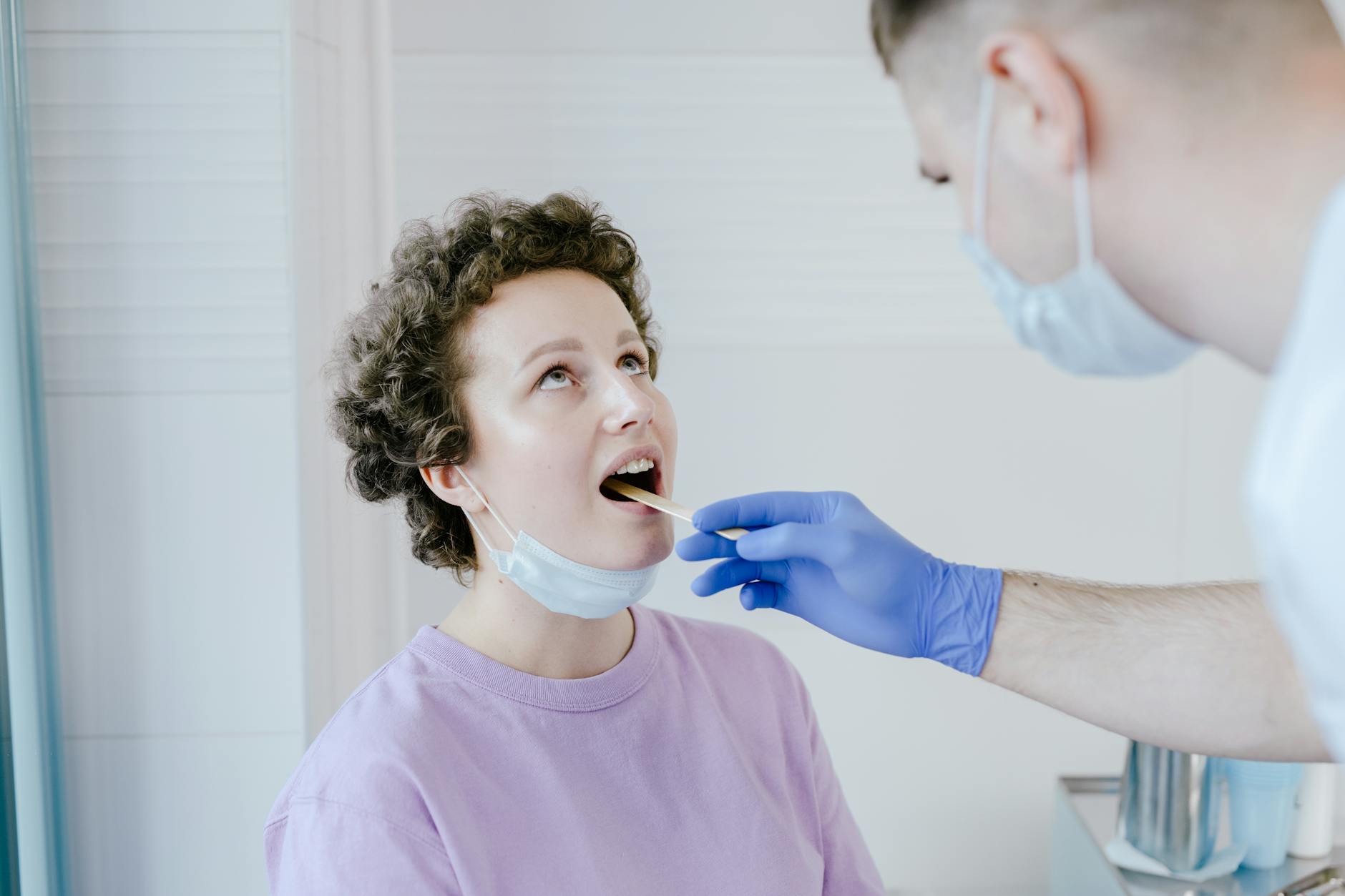
Your throat hurts, and you want a quick fix. You sit on the exam table expecting a prescription, convinced bacteria are eating your tonsils alive. Let us talk about what is actually happening back there.
1. The Scent of the Swab
Tuesday afternoon, a patient pointed a rigid finger at her neck and told me she always needs a Z-Pak for this. But I already knew the rapid swab would be positive before she even opened her mouth to speak. Group A strep has a scent. It hits you the second you walk into the tiny exam room. A metallic, faintly sweet odor of decaying cells. Textbooks talk about the Centor criteria, looking for swollen lymph nodes and an absent cough to make a diagnosis. In the room, you rely on the way the patient sits perfectly still because turning their head pulls the inflamed muscles. (You learn to trust the smell more than the redness.) The back of the throat rarely matches the textbook pictures. Sometimes it is pale pink with angry purple streaks. Most articles will tell you antibiotics are the default cure. That framing misses the point entirely. We treat strep to prevent rheumatic fever, not just to make the pain stop a day faster. The NIH guidelines are clear that penicillin or amoxicillin remain our first line defense to shorten symptoms and block those rare heart complications. Yet azithromycin gets handed out like candy by urgent cares simply to get people out the door.
2. The Virus That Lies
Adenovirus is a liar. Medical school teaches that white spots on your tonsils mean a bacterial infection. Reality is far messier. I look in your throat and see thick white exudates coating the tonsillar crypts. It looks identical to strep. But your eyes are slightly pink. You have a mild cough. Strep doesn’t cause coughs. The virus is just throwing a very convincing masquerade party.
3. The Rapid Test Paradox
We swab your throat. You gag. We wait five minutes. The line is negative, but you’re still in agony. Here is the quiet truth about rapid antigen tests. They rarely produce false positives, but their sensitivity hovers around eighty percent. Twenty out of a hundred true strep cases might slide right past the chemical reagent. If you look miserable enough, I will send a throat culture to the lab. That takes two days. You want relief now. We sit in that awkward space between medical stewardship and your suffering. A PubMed review emphasizes using rapid tests on patients with multiple Centor criteria to guide cost-effective treatment. We follow the math, even when it feels deeply inadequate.
4. The Phantom Drip
“It feels like I’m swallowing broken glass.” Another patient whispered that to me last month. He was convinced it was an acute infection. His throat was completely clear. No redness. No swelling. Just a raw, glistening posterior wall. This is where the general practitioner often misses what the specialist catches. The GP sees throat pain and thinks infection. An ENT or seasoned clinician sees cobblestoning and thinks acid. Silent reflux bathes your delicate pharyngeal tissue in stomach acid while you sleep. You wake up with a fiery sore throat that fades by noon. It’s an entirely different mechanism. No amount of amoxicillin will fix a mechanical valve issue in your esophagus.
5. The Temperature Trap
The temperature of your water changes the local environment. Ice numbs the surface nerve endings. Hot tea dilates blood vessels, flooding the area with inflammatory cells.
You are quite literally choosing between temporary anesthesia and accelerated swelling.
Choose cold.
6. The Myth of the Magic Lozenge
You wander the pharmacy aisle staring at rows of brightly colored boxes. Cherry flavor. Honey lemon. Maximum strength. They all promise to coat your throat. Most of them are just hard candy with a massive marketing budget. The active ingredient is usually menthol. Menthol creates a cooling sensation by tricking your thermal receptors. It does absolutely nothing to alter the inflammatory cascade happening in your mucosal lining. Why do we still recommend them? Because distraction is a valid clinical tool. If your brain is processing a sharp, cold sensation, it has less bandwidth to process the dull, throbbing pain of pharyngitis. But you have to read the labels carefully. Some contain benzocaine. Benzocaine actually numbs the tissue. The problem is that people suck on these back to back, swallowing the numbing agent all day long. Then they wonder why their stomach feels hollow and their heart races slightly. We do not fully understand the exact threshold where topical oral anesthetics disrupt systemic digestion. The gut microbiome interacts with these swallowed chemical compounds in ways we are barely beginning to track. You are treating a symptom at the top of the tube, ignoring what happens when the medicine travels down into the dark.
7. The Steroid Bridge
Sometimes the swelling is so severe you can barely open your mouth. We call that trismus. It happens when the inflammation spreads from the mucosal lining into the surrounding muscle planes. A single dose of dexamethasone can shrink that swelling in hours. Is it curing the infection? No. It just buys us time. It opens the airway and lets you swallow your own saliva again. We don’t use oral steroids lightly. They spike your blood sugar and make you jittery. But in severe viral pharyngitis, where antibiotics are useless, a steroid shot is the only lever we have left to pull. It’s a calculated trade off between immediate airway patency and transient immune suppression.
8. What the Color Green Actually Means
People routinely point to the tissue they just coughed into. They show me green mucus as proof they need an antibiotic. Green doesn’t mean bacteria. Green means your white blood cells have arrived. Neutrophils contain an iron-rich enzyme called myeloperoxidase. When they die after fighting a virus, they turn the surrounding mucus green. It’s a graveyard of your own immune system. Diagnostic guidelines, like those found on PubMed, emphasize using modified Centor scores and limiting antibiotics to cases that fail to improve after five days. We watch the clock. We let the white blood cells do their messy work.
9. The Danger of the Tongue Depressor
Avoiding the wooden tongue depressor is a quiet art form. Shoving a stick to the back of an already inflamed throat is borderline cruel. If you know how to position a patient, you rarely need it. Ask them to pant like a dog. The soft palate lifts naturally. You get a perfect view of the posterior pharynx without triggering the gag reflex. Medical training teaches us to use the tools on the tray. Clinical experience teaches you to leave the tools alone until absolutely necessary. Or maybe we just get tired of patients gagging on us. The less trauma I inflict on your swollen tissue, the better your afternoon will be.
10. The Lingering Shadow
Sharp pain fades by day four. Then the dry cough starts. The viral infection strips the epithelial lining of your throat, leaving the nerve endings exposed to raw air. Every breath tickles. You cough, which causes microscopic trauma to the healing tissue, which makes you cough again. It’s a self-sustaining loop. Patients return on day ten angry that they are still sick. They aren’t sick anymore. They are just damaged. The original invader is long dead. What remains is a stretch of denuded cells trying to rebuild themselves in a wind tunnel.
Medical Disclaimer: This article is for informational purposes only and does not constitute professional medical advice. Always consult a qualified healthcare professional before making changes to your health routine.




