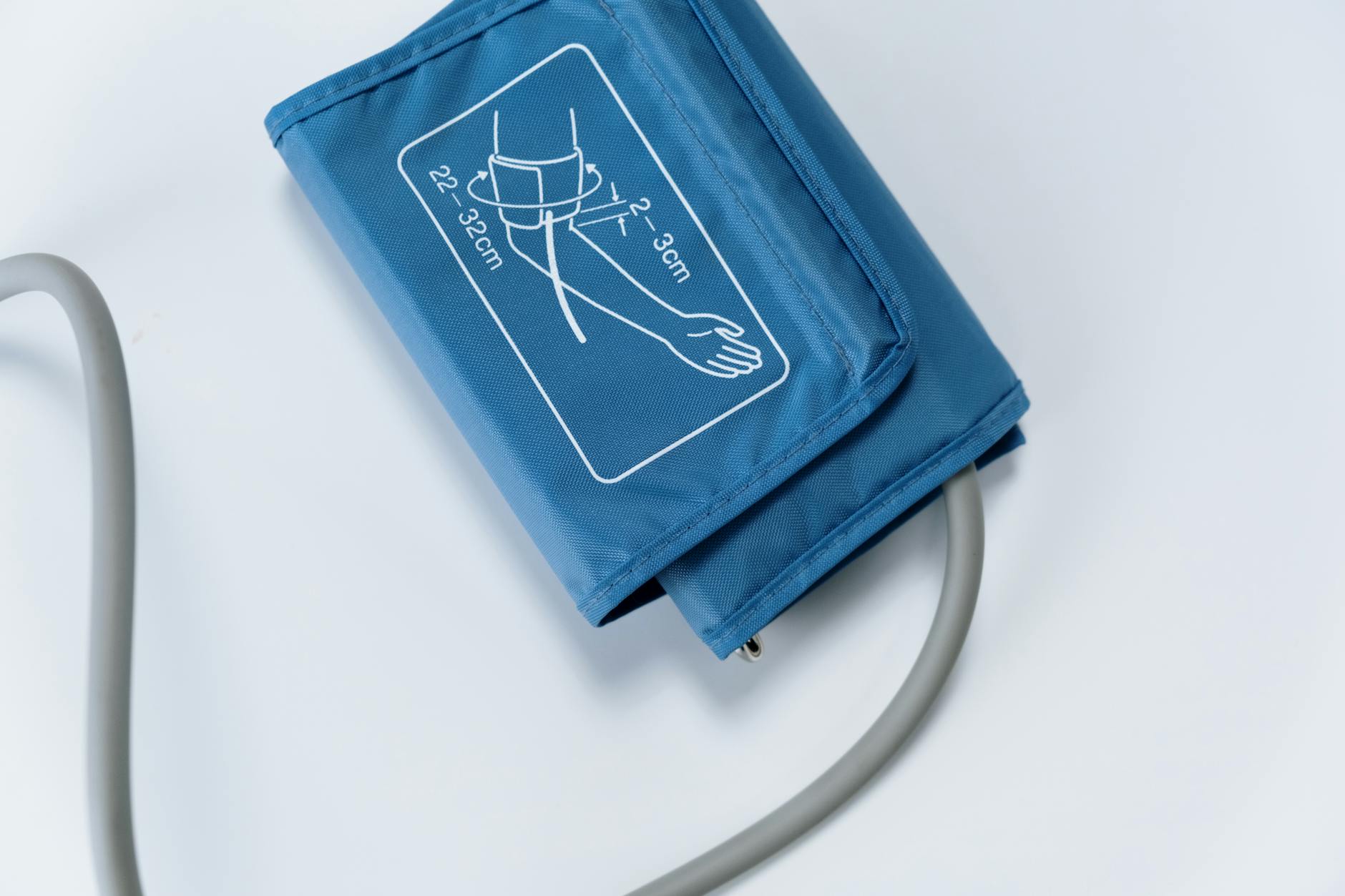
We spend decades medicating high blood pressure as if it were a character flaw. Nobody looks at the adrenal glands sitting on top of the kidneys, quietly pumping out a hormone that forces the body to hold onto salt and dump potassium. You end up treating a symptom while the actual engine driving the disease runs unchecked in the background.
1. The Blood Pressure Decoy
Most articles will tell you high blood pressure is just a byproduct of aging or bad diet. That framing misses the point. When I see a patient on three different blood pressure medications who still clocks in at 160 over 100, my mind goes straight to the adrenals. Primary aldosteronism is basically rogue tissue flooding your system with a hormone that acts like a sponge in your kidneys. It forces your blood vessels to retain water and sodium. And your heart pumps brutally hard just to move that extra fluid volume around the body. The damage happens quietly over years. We see thickened heart walls and stiff arteries long before anyone thinks to check the actual hormone levels.
2. The Fifteen-Minute Blind Spot
General practitioners do their best with the fifteen minutes they get per visit. But this disease completely thrives in the massive blind spot between primary care and specialty endocrinology. A patient will sit on my exam table and say, “My doctor just keeps adding another pill and telling me to eat less salt.” They’re frustrated. Every morning feels like a battle. The tragedy is that the screening test is a cheap blood draw looking at the ratio of aldosterone to renin. In a healthy person, when blood pressure goes up, the kidneys stop making renin, which then tells the adrenals to stop making aldosterone. It is an elegant feedback loop. In aldosteronism, the adrenal glands ignore the signal entirely. Your renin drops to zero while aldosterone stays fiercely elevated. Your body is screaming to turn off the faucet, but the handle is snapped off. (This mechanism is fascinating, though devastating in practice). Why do smart doctors miss this? Because the routine metabolic panel looks perfectly normal unless the potassium has completely tanked. The system is rigged to miss the root cause until the patient has a stroke at fifty. We keep patching the tire without realizing the rim is bent.
3. Heavy Feet and Deep Chairs
Textbooks claim low potassium presents as generalized muscle weakness or cramping. That definition is too sterile. In the exam room, it looks like a middle-aged woman struggling to push herself out of a deep chair. Her gait is heavy. She drags her feet slightly because the nerves cannot fire properly without that electrolyte.
4. The Microscopic Factory
We used to think these tumors were just bad luck. Now we know it comes down to a localized glitch in the adrenal tissue. PubMed notes that mutations in genes encoding ion channels increase calcium inside the cells, which triggers autonomous aldosterone production. The cells literally forget how to shut down. These tiny structures become microscopic factories running day and night. You won’t feel a tumor growing. It rarely shows up on a standard CT scan without contrast protocols calibrated exactly for the tiny adrenal glands. The gland looks completely normal right up until we pull it out and slice it under a microscope. You have to suspect the biochemistry before you can ever hope to see the anatomy.
5. The Face of Fluid Retention
I usually know before the lab results even come back. There’s a distinct kind of facial puffiness that comes with chronic sodium retention. It sits heavily under the eyes and along the jawline. A young guy came in last month, practically vibrating with anxiety, and told me, “I feel like I have a motor running inside my chest that won’t turn off.” That was the moment. His heart was desperately compensating for the massive fluid load. His face had that tight, swollen sheen I’ve seen a hundred times. We ran the hormone ratio right then. You can’t unsee that exact combination of deep exhaustion and physical tension once you learn to recognize the pattern.
6. The Zebra That Was Actually a Horse
We used to treat this condition as a rare zebra in medical school. You either had a massive adrenal tumor or you didn’t. That binary thinking has ruined a lot of lives over the decades. The reality is a wide continuum of dysfunction. PubMed shows that biochemically overt cases occur in 11-22% of hypertensive patients, mirroring the severity of their high blood pressure. Some people have bilateral hyperplasia, where both glands are just slightly enlarged and overactive. Some have microscopic cell clusters that are entirely invisible on imaging but still pump out lethal amounts of hormone. We still don’t fully understand why some adrenal glands undergo these hyperplastic changes while others form discrete adenomas. Is it environmental? Is it a secondary response to decades of poor vascular health? We are guessing. What we do know is that treating the hypertension without blocking the aldosterone leaves the patient exposed to massive cardiovascular risk. The hormone itself is highly toxic to the heart muscle. It causes heavy fibrosis. Flexible tissue turns into rigid scar material, stripping away the heart’s ability to relax between beats. This stiffness is what eventually leads to heart failure, even if the blood pressure numbers look vaguely acceptable on paper.
7. The Midnight Fluid Shift
Fluid shifts dramatically while you sleep.
When you lie flat, all that retained sodium and water redistributes into your neck, thickening the airway. You surgically remove the rogue adrenal gland, and the brutal snoring often stops completely.
8. The Groin Catheter Truth
How do you prove which gland is actually causing the problem? You thread a tiny catheter up through the groin and into the veins draining each adrenal gland. It’s a miserable, technically demanding procedure. The interventional radiologist has to draw blood directly from the source while the patient lies perfectly still. If the left vein has ten times the hormone concentration of the right, we have our surgical culprit. If both sides are elevated, surgery is permanently off the table. You’re stuck managing the fluid overload with daily medication for the rest of your life. Going digging around in the veins just to make a diagnosis sounds barbaric. But imaging lies to us constantly, and this blood map is the only truth we trust.
9. The Sloppy Chemical Blockade
Spironolactone is an old, remarkably cheap drug. It blocks the aldosterone receptor directly at the cellular level. But it comes with a heavy physiological cost. Men grow breast tissue. Women bleed unpredictably. It binds to progesterone and androgen receptors because its chemical structure is incredibly sloppy. We use it anyway because it works so well. It forces the kidneys to dump the sodium and desperately hold onto the potassium. The blood pressure plummets rapidly. I regularly watch patients lose ten pounds of pure water weight in a single week. They despise the side effects. They take it regardless, because they finally stop ending up in the local emergency room with terrifying hypertensive crises every other month.
10. The Irreversible Fibrosis
The tragedy of this disease isn’t the high blood pressure itself. It’s the silent tissue destruction happening underneath the surface. PubMed confirms that primary aldosteronism contributes heavily to cardiovascular and kidney disease, yet it remains rarely diagnosed due to a baffling lack of awareness. The excess hormone severely inflames the delicate inner lining of your blood vessels. Your kidneys slowly scar over, permanently losing their intricate filtration capacity. By the time someone figures out what is actually driving the illness, the structural damage is entirely permanent. We can surgically remove the tumor. We cannot reverse the dense fibrosis it leaves behind in the heart muscle. The patient lives, but their organs age two decades in the span of five years.
The medical system is perfectly designed to ignore the adrenal glands until your heart literally begins to fail. Demand an aldosterone-to-renin ratio blood test if your blood pressure remains stubbornly high on two or more daily medications.
Medical Disclaimer: This article is for informational purposes only and does not constitute professional medical advice. Always consult a qualified healthcare professional before making changes to your health routine.




