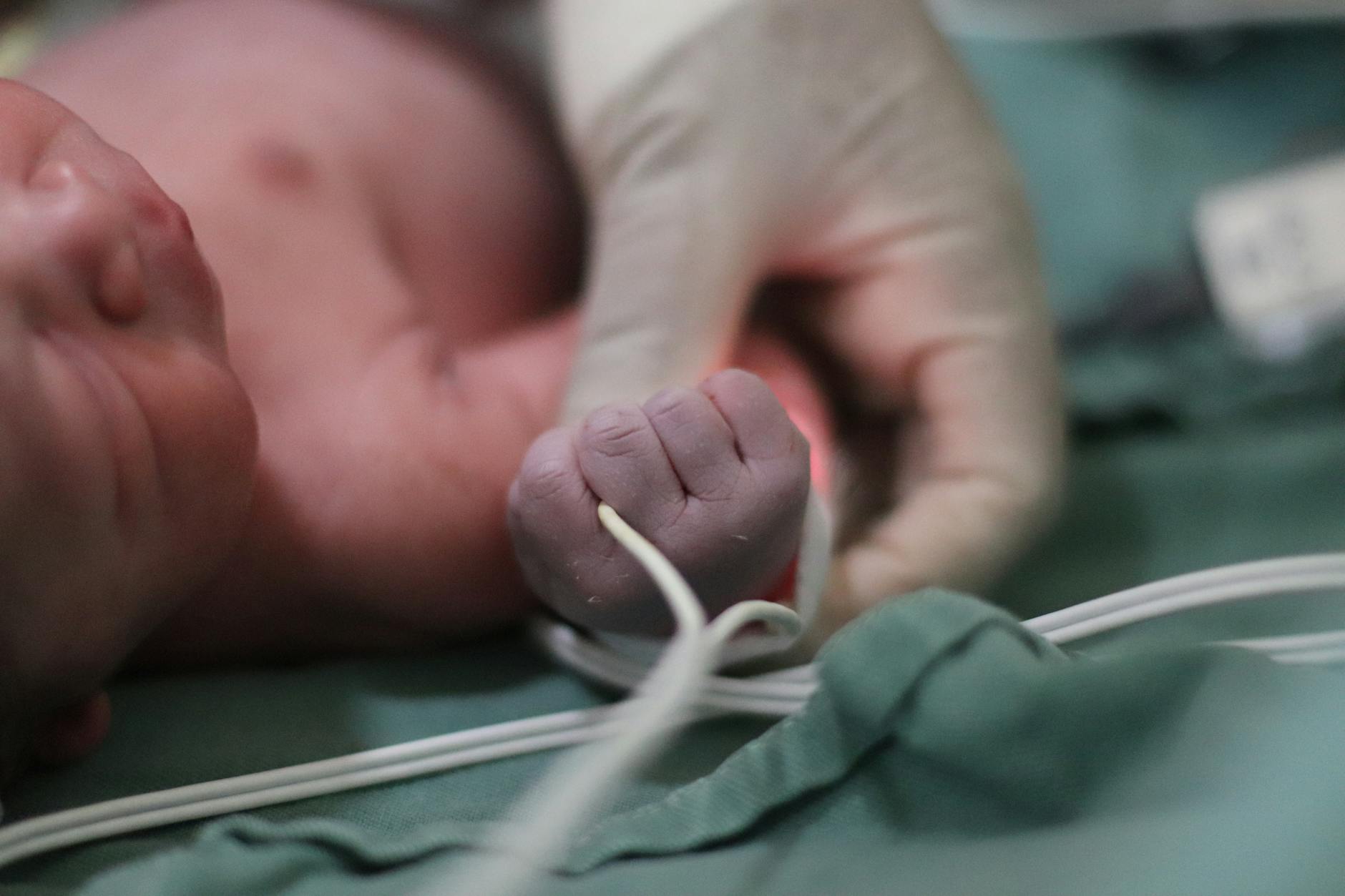
Bilirubin is a garbage molecule. It piles up when red blood cells break down, and if the liver is too immature or damaged to clear it, the tissues turn yellow. You see this exact same panic in the eyes of new parents and adult liver failure patients alike.
1. The Physics of Blue Light
We put newborns under bililights. Parents routinely assume the heat is somehow sweating the jaundice out of their child.
The light is literally changing the molecular geometry of a toxin.
That’s fundamentally how photo-isomerization works. The exact wavelength of blue light penetrates the epidermis and physically alters the shape of the bilirubin molecule. It twists the fat-soluble isomer into a water-soluble form called lumirubin. Your infant can then excrete it into their diaper without needing the liver to process it at all. A 2021 clinical review by Pan and colleagues confirms this remains our frontline defense against brain damage. But you have to maximize skin exposure to make it work. Just the diaper, nothing else.
2. The Breast Milk Paradox
Mothers often blame themselves. A frantic woman sat in my clinic last week and said, “He looks like a little highlighter.” Breast milk jaundice happens because an enzyme in the milk blocks intestinal breakdown of bilirubin. We don’t stop breastfeeding. You keep feeding right through it. The infant’s gut eventually colonizes with bacteria that handle the load.
3. The Window Light Confession
I knew the adult patient had a biliary obstruction the second he walked into exam room four. Artificial clinic lighting washes out subtle color changes, but he sat right next to the window. I noticed the faint mustard tint pooling in the medial corners of his sclera before I even pulled his chart or ordered the labs. Textbook descriptions tell medical students to look for generalized skin yellowing. In practice, the skin is an unreliable narrator. (Melanin masks early tissue staining completely). You look at the whites of the eyes, the mucous membranes under the tongue, and the hard palate. Treatment here isn’t a light box. It’s a plastic stent. When a gallstone lodges in the common bile duct, the plumbing backs up into the liver. The bilirubin spills directly into the bloodstream. We send these patients to endoscopy for an ERCP, a procedure where a gastroenterologist threads a scope down the throat and physically drags the stone out of the duct. The relief is almost immediate. By the next morning, that mustard stain in the eyes begins to fade. The urine, which had turned the color of dark tea over the previous week, finally clears up as the kidneys stop trying to filter the overflow. It’s a purely mechanical fix for a plumbing catastrophe.
4. The Subcutaneous Fat Trap
Why do premature infants struggle so much more with hyperbilirubinemia? They lack the albumin to bind the free bilirubin. The 2004 clinical practice guidelines from the AAP dictate aggressive threshold tracking precisely because premies have zero margin for error. Textbooks teach a neat cephalocaudal progression, where the yellow moves cleanly from head to toe as levels rise. In the exam room, you’re often pressing a thumb into the blanching skin of a squirming infant trying to guess the depth of the stain. Fat absorbs bilirubin. When a baby has very little subcutaneous fat, that unbound toxin circulates freely. It crosses the blood-brain barrier. Kernicterus is the nightmare scenario we’re always trying to outrun. The brain damage it leaves behind is permanent, which is why we obsess over gestational age in the nursery.
5. The Antibody War
Sometimes the mother’s blood attacks the baby. ABO incompatibility creates a battlefield in the infant’s bloodstream. Red blood cells rupture at massive rates, flooding the system with more bilirubin than any blue light can handle. We use intravenous immunoglobulin for this. It essentially coats the infant’s red blood cells, hiding them from the maternal antibodies still circulating in the plasma. The destruction stops.
6. The Biliary Atresia Miss
GPs miss this anatomical disaster constantly. A two-week-old comes in for a weight check, still visibly jaundiced. The family doctor assumes it’s just lingering breast milk jaundice and tells the parents to wait. Meanwhile, the child’s bile ducts are slowly obliterating themselves. You have a very narrow window to perform a Kasai procedure, surgically attaching a loop of intestine directly to the liver to establish drainage. Wait too long, and the liver becomes cirrhotic. The child will need a transplant before kindergarten. Prolonged jaundice extending beyond fourteen days demands fractionated labs. We need to know if the bilirubin is conjugated. If it is, you’re no longer dealing with a benign newborn phase. You’re dealing with a failing organ.
7. The Phantom Itch
Most articles will tell you jaundice is just a cosmetic issue of turning yellow. That framing misses the point entirely for adult patients with chronic cholestasis. The yellow skin is the least of their problems. Bile salts deposit in the dermal layers. A fifty-year-old woman with primary biliary cholangitis sat on my exam table recently, exhausted, and told me, “My skin is itching from the inside out.” She had scratched her arms raw while sleeping. You can’t fix this with over-the-counter hydrocortisone creams. The itch originates from systemic bile acid accumulation, not a localized histamine reaction. We treat this aggressively with medications like cholestyramine, which binds bile acids in the gut so they can be excreted in stool. Sometimes we use rifampin, an antibiotic that off-labels as an enzyme inducer to help the liver metabolize the pruritogens. If you only look at the yellow hue of a jaundiced patient, you’re ignoring the invisible torture happening underneath the epidermis. They are losing their minds from the sensation. The scratching becomes a frantic, involuntary reflex that ruins their sleep architecture for months. I’ve had patients tell me they considered taking a wire brush to their legs just to feel pain instead of the unrelenting pruritus.
8. The Fenofibrate Mechanism
We’ve started using a cholesterol drug to treat neonatal jaundice in severe cases. Fenofibrate activates targeted receptors in the liver that accelerate bilirubin clearance. The exact cascade of how it upregulates these metabolic pathways is not fully understood yet. But it works. I’ve watched it bring numbers down when phototherapy alone was stalling. It acts as an adjuvant therapy. You give it orally, and within forty-eight hours, the liver’s conjugation capacity surges. We reserve this for the stubborn cases hovering just below the exchange transfusion threshold. It buys the immature liver time to catch up without requiring more invasive vascular procedures. A recent review by Zhou and colleagues highlights how these adjuvant medications optimize management when lights alone fail. It’s fascinating watching a drug designed for adult hyperlipidemia rescue a three-day-old infant from neurological injury.
9. The Blood Swap
This is the absolute panic button in neonatology. When bilirubin climbs past twenty-five milligrams per deciliter, phototherapy is too slow. The toxin is already seeping into the brain stem. An exchange transfusion literally removes the poisoned blood and replaces it with donor blood. We pull small volumes from an umbilical catheter, pushing fresh red cells back in through a vein. It’s a tedious, high-risk cycle. You watch the infant’s heart rate monitor like a hawk. The calcium levels drop. The platelets wash out. We only do this when the alternative is permanent neurological devastation. It is the most aggressive reset switch we have in our arsenal. The room gets incredibly quiet during the procedure. Nobody speaks unless they are calling out vitals or blood volume metrics.
10. The Window Myth
Grandmothers love to suggest putting the baby in the window. I spend half my week talking parents out of this idea. Filtered sunlight through double-pane residential glass doesn’t provide the concentrated irradiance needed for effective photo-isomerization. You’re mostly just exposing a naked newborn to drafts and potential sunburn. Commercial phototherapy units deliver targeted irradiance in the 460-nanometer range. A living room window delivers a diluted spectrum of visible light and ultraviolet radiation. If the infant’s levels are high enough to require treatment, they need clinical intervention. If they are low enough to sit in a window, they simply need more frequent feeding to stimulate bowel movements. The sunlight trick is a generational placebo. We measure bilirubin in fractions of a milligram because the margins matter, and you cannot control the dosing of a cloudy Tuesday afternoon.
Jaundice is a mechanical failure of clearance, not a cosmetic quirk. Track stool color daily if you suspect a biliary obstruction, as acholic, pale stools will alert you to a blocked duct long before the skin turns yellow.
Medical Disclaimer: This article is for informational purposes only and does not constitute professional medical advice. Always consult a qualified healthcare professional before making changes to your health routine.




