Prion diseases dismantle the human brain with terrifying speed. Families usually arrive at my clinic exhausted from weeks of unexplained falls and sudden personality changes.
1. The ghost we chase versus the clinical name
Nobody actually catches mad cow disease. You’re developing the human equivalent called variant Creutzfeldt-Jakob Disease. But patients still use the 1990s tabloid term when they sit in my office terrified about a steak they ate in London thirty years ago. We spend half our initial consultation untangling old media panic from current symptoms.
2. What the primary care doctor misses
General practitioners see early vCJD and almost always diagnose severe depression or acute psychosis. They prescribe SSRIs or antipsychotics because the initial deterioration isn’t motor. It is mood. A patient becomes withdrawn, paranoid, and intensely anxious over a few weeks. The GP misses the subtle ataxia creeping in behind the psychiatric veil, assuming the clumsiness is just a side effect of the new anxiety medications. By the time they reach my neurology clinic, the gait instability is undeniable. I remember watching a 45-year-old man walk from the waiting room to my exam chair last year. He had this wide-based, almost magnetic hesitation in his step that made my stomach drop. I recognized the prion-like progression before the spinal tap ever came back positive for 14-3-3 proteins. You see that mechanical failure of the cerebellum once and it burns into your visual memory. (Most movement disorders look like a slow rusting of joints, but this looks like the brain’s wiring is actively dissolving.) The tragedy is the wasted time. Families spend months fighting for psychiatric inpatient beds, convinced their loved one is just having a nervous breakdown. We have to sit them down and explain that the paranoia is not a chemical imbalance, but structural brain death. They should be preparing for hospice, not therapy.
3. The sensory illusions
“My legs feel like they are walking through wet concrete.” That is exactly how a patient described her early sensory symptoms to me before she lost the ability to speak. Textbooks call this dysesthesia. In the exam room, it looks like a person constantly readjusting their posture because their brain receives garbled signals from their limbs. Pain often precedes the severe cognitive decline. They complain of burning sensations or cold patches on their skin that migrate daily. We check for neuropathy. We order spine films. The reality is the thalamus is failing.
4. A solitary rogue protein
Most articles will tell you infectious diseases require a virus or bacteria to spread. That framing misses the point. Prion diseases operate on a geometry problem. A normal, benign protein folds into a microscopic sheet instead of a helix. It then touches neighboring proteins, forcing them to adopt its deformed shape in a cascading biological avalanche. No genetic material is exchanged during this process, making it completely unlike a viral infection.
There is no immune response because the body thinks these proteins belong there.
5. The pulvinar sign on the screen
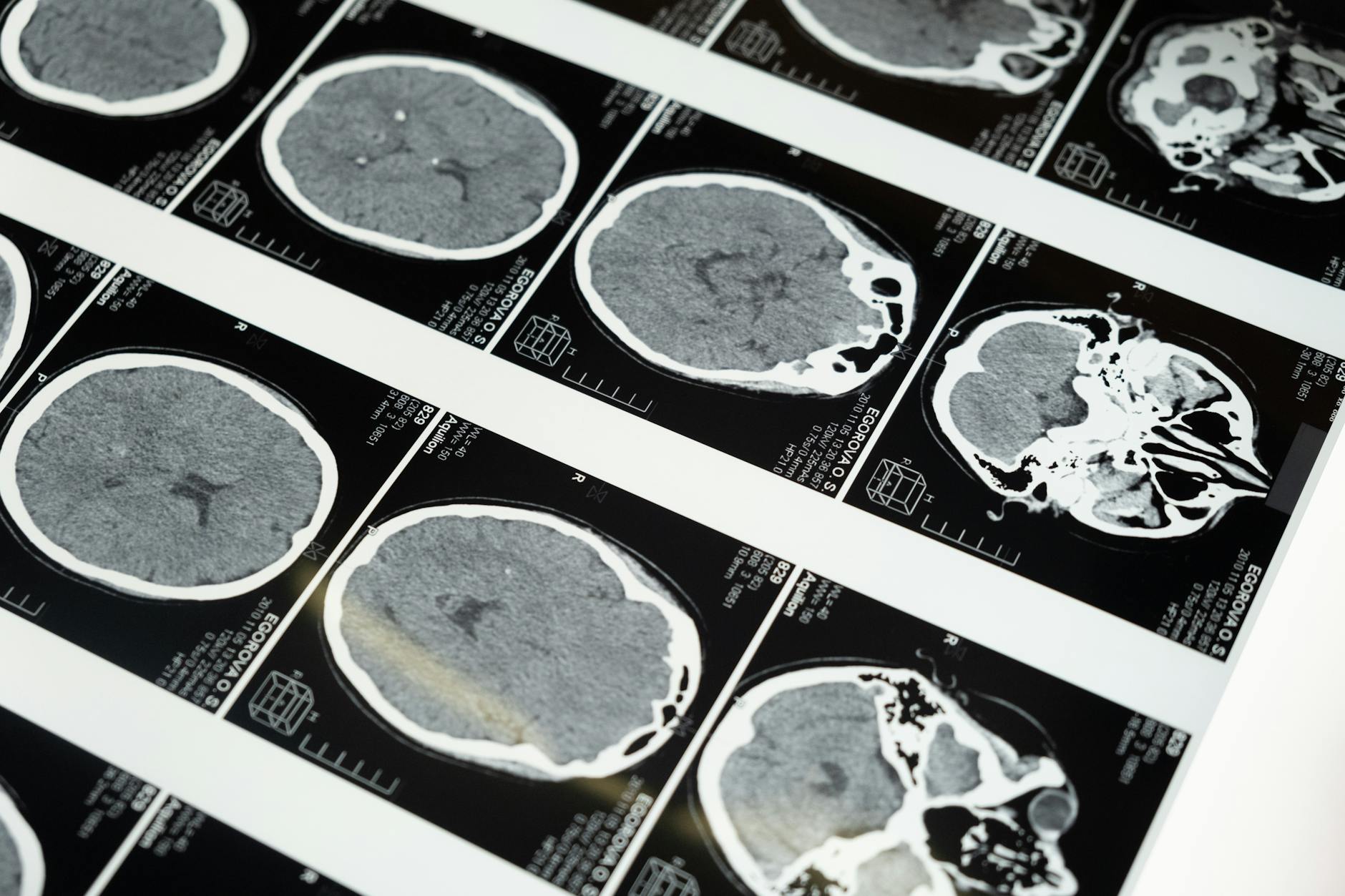
We order a brain MRI looking for strokes or tumors. Instead, we see the pulvinar sign. The back part of the thalamus lights up symmetrically on the fluid-attenuated sequences. It looks like two bright glowing eyes staring back at you from the black-and-white scan. That image usually seals the diagnosis before the lab tests return.
6. The collapsing timeline
Textbooks describe the progression of CJD as a predictable staircase of cognitive decline followed by myoclonus. Exam room reality is far more chaotic. A patient might lose the ability to swallow on Tuesday, seem strangely lucid and conversational on Thursday, and slip into a semi-comatose state by Sunday. The pacing breaks families. They brace for a slow Alzheimer’s-like fade, expecting years of gradual memory loss. Instead, they get a free-fall that defies any logical medical timeline. “I just want my husband to stop jerking when he tries to sleep,” a wife pleaded with me last winter. She was talking about the myoclonic jerks. These violent, shock-like muscle spasms happen when the cortex misfires, usually triggered by a sudden loud noise or even just turning on the lights in the room. We give clonazepam to quiet the muscles, pushing the doses as high as we safely can. It barely blunts the edge. The brain is literally turning into a sponge, hollowed out by microscopic vacuoles where healthy neurons used to live and communicate. Watching a human being lose decades of identity in a matter of eight weeks feels like watching a house burn down while you stand outside with a garden hose.
7. The silent incubation
How long can a misfolded protein hide in the body before the first symptom hits? We simply do not know the upper limit. Current data tracking the UK outbreak from the 1980s suggests people can harbor the variant form for decades without a single neurological glitch. The protein replicates silently in the lymph tissue. It slowly crawls up the peripheral nerves toward the central nervous system, just waiting.
8. Surgical instrument fears
Can you catch this during a routine surgery? Yes, but the odds are vanishingly thin. Standard hospital autoclaves don’t destroy prions. The proteins survive boiling, radiation, and standard formaldehyde treatments. If a neurosurgeon operates on an undiagnosed CJD patient, those instruments must be tracked and frequently destroyed. But this applies only to brain and spinal cord tissue contacts. You aren’t going to contract a prion disorder from a routine knee replacement.
9. The vanishing of sleep
The insomnia is absolute. The thalamus acts as the brain’s circadian relay station. And as prions destroy it, the architecture of sleep completely disintegrates. Patients don’t just sleep poorly. They lose the biological capacity to enter slow-wave rest. We try heavy sedatives. We try off-label hypnotics. Nothing forces the brain into a restorative state once the structural damage crosses that threshold.
10. The absolute finality
We have no cure. And we have no treatment that slows the progression. When the spinal fluid confirms the diagnosis, my job shifts entirely from investigation to palliation. We manage the pain and quiet the muscle spasms. We coordinate with hospice nurses to keep the patient comfortable. The descent is steep, and it ends exactly the same way every single time.
Rapid, unexplained cognitive decline mixed with sudden coordination loss is a medical emergency, not a psychiatric phase. Skip the psychiatric evaluations and demand an immediate neurological consultation to rule out rapid-onset dementias and prion disorders.
Medical Disclaimer: This article is for informational purposes only and does not constitute medical advice. Always consult a qualified healthcare professional before making health decisions.




