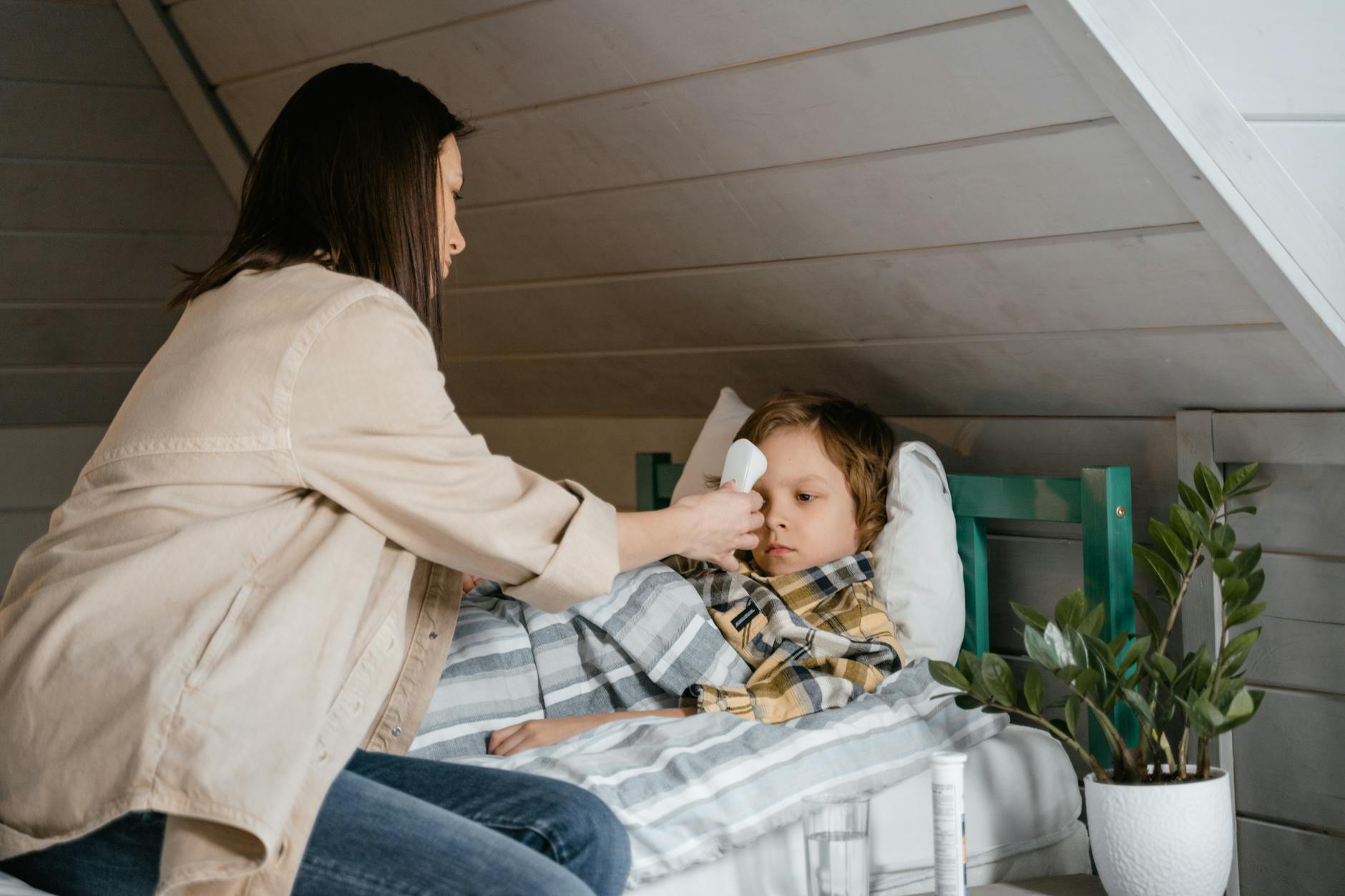
I remember walking into Exam Room 3 and feeling the heat radiating off a little boy before I even touched him. Most articles will tell you to look for a red rash. That framing misses the point, because the skin is the last organ to complain.
1. The Deceptive Upper Respiratory Phase
Parents always bring them in thinking it is a brutal adenovirus. “He’s just burning through his Tylenol,” a mother told me last month, holding a limp toddler. You see the runny nose and the hacking cough. GPs often send these kids home with a viral upper respiratory diagnosis. The subtle tell at the specialist level is the sheer volume of nasal secretions combined with an odd lethargy. The child looks utterly miserable. They are not playing between fever spikes. Their eyes begin glossing over entirely. Textbook descriptions classify this initial phase as coryza and fever. In the room it just looks like a child who is sinking into the mattress. You feel the lymph nodes in their neck. Those glands feel exactly like hard little marbles beneath your fingers.
2. Eyes That Cannot Tolerate the Light
The textbook calls it conjunctivitis. I call it the dark room sign. Kids with this virus will bury their faces in your shoulder to avoid the fluorescent clinic lights. Their eyes stream constantly. They look swollen, wet, and intensely irritated. You might think it is a standard pink eye complication. It is actually the virus actively replicating in the conjunctival tissue.
3. The Grains of Salt on a Wet Background
This is the moment I usually know. I will ask the child to open their mouth wide. You have to use a very bright penlight and angle it toward the back cheeks. The buccal mucosa is usually fiery red. Against that angry background, you will see tiny white or bluish-white specks. They look exactly like spilled grains of table salt on a wet red carpet. Textbooks name them Koplik spots. Most general practitioners miss them entirely because the spots only last about 24 to 48 hours. By the time the rash appears on the skin, these oral lesions are already fading. But if you catch them, the diagnosis is locked. “It’s like she has a terrible cold but her skin is angry,” another parent said to me once, right before I looked in the mouth. I saw those spots and knew exactly what was coming next. The fever was going to spike again. The child was going to get worse before getting better. We still do not entirely understand why the virus concentrates so aggressively in the oral mucosa before disseminating to the rest of the body. It feels like an anatomical mystery. The mouth acts as an early warning system that disappears just when the real storm hits.
4. The Hairline Downward March
Rashes are notoriously tricky to interpret. This one follows a strict geographical path. It almost always begins right at the hairline or behind the ears. Over the next three days, it marches downward. It covers the face, then the trunk, and finally the arms and legs. It starts as flat red spots. Those spots eventually merge together into large, angry patches.
The fever always breaks right before the rash explodes.
You will feel the skin and notice it feels slightly raised and rough. The child will look mottled. Clinical guides reference this classic spread alongside the initial high fever.
5. A Barking, Relentless Cough
It sounds dry. The noise is painful to hear. The cough associated with this virus does not produce much mucus at first. It just echoes through the clinic hallways. You can hear them in the waiting room. The virus inflames the entire respiratory tract. It damages the epithelial cells lining the airways. The coughing fits leave them gasping.
6. The Immune Amnesia Effect
You fixate on the acute illness. The real danger happens quietly in the background. This virus acts like a hacker deleting a hard drive. It infects and destroys the memory cells of the immune system. We call it immune amnesia. A child might recover from the initial infection but will spend the next two years vulnerable to every passing pathogen. They lose the antibodies they built up against other diseases. I have seen kids return to the hospital months later with severe pneumonia or violent gastrointestinal infections. Their immune system simply forgot how to fight. Mina and colleagues documented in 2015 how this associated immunosuppression leaves a lingering shadow. You think you are out of the woods when the skin clears. You are actually entering a highly vulnerable period. Parents ask me when their child can go back to daycare. I hesitate. Putting them back into a germ-heavy environment right after this infection is incredibly risky. The body has to rebuild its defenses from scratch. It takes months. Sometimes it takes years. You have to treat every subsequent cold or sniffle with intense suspicion. What used to be a standard daycare bug can easily escalate into a hospital admission because the immune guards are asleep at their posts.
7. The Fragmented Presentation
Do vaccinated kids get this? Yes, but it looks entirely different. When a child has partial immunity, the virus struggles to gain a foothold. The classic symptoms fragment. You might see a mild rash but no fever. You might get the runny nose without the eye irritation. It confuses everyone. The textbook picture shatters into disjointed pieces. (We see this more often now than we did ten years ago.) The incubation period stretches out longer than usual. You have to rely heavily on exposure history rather than physical signs. The lack of severity is a blessing, yet it makes tracing the outbreak a nightmare.
8. Temperatures That Frighten Parents
We are not talking about a mild elevation. The thermometer often reads 104 degrees Fahrenheit. It spikes rapidly. The child will shiver violently while radiating intense heat. The fever drives the lethargy. You give an antipyretic, and the temperature barely budges. The body is waging a massive systemic war. Viral particles are actively flooding the lymphatic pathways. Parents panic at these numbers. They should. Such extreme temperatures increase the risk of febrile seizures. And you watch the child closely for any twitching or sudden unresponsiveness, knowing the neurological system is under immense stress. The heat feels trapped under their skin. You just have to wait out the internal thermostat reset.
9. The Fading and Peeling Skin
About a week after the spots appear, the redness finally begins to turn brown. Then the skin starts to flake off. The texture mimics a peeling sunburn. This desquamation usually follows the exact same downward path the rash took. First the face peels. Then the trunk. The itching during this phase can be maddening. The child is finally starting to regain their energy, but now they are scratching constantly. The virus has finished its damage to the dermal layers. The body is just cleaning up the debris. You see dead tissue sloughing off onto the exam table paper.
10. The Silent Fluid Buildup
You examine the eardrums. They are bulging and opaque. Otitis media is the most frequent complication I see in the clinic. The respiratory inflammation blocks the Eustachian tubes. Fluid pools in the middle ear. Opportunistic bacteria quickly invade that trapped, stagnant moisture. The child cannot tell you their ear hurts because they are already crying from everything else. You have to look for it. The primary viral infection paves the road for secondary bacterial invaders. The initial illness clears. Those secondary infections stay behind to cause trouble. You write a prescription for antibiotics, knowing the virus itself remains entirely untouchable. The child leaves the clinic, still coughing.
The acute phase of this virus is violent but temporary. Monitor the child’s respiratory rate closely during the second week of illness.
Medical Disclaimer: This article is for informational purposes only and does not constitute professional medical advice. Always consult a qualified healthcare professional before making changes to your health routine.




