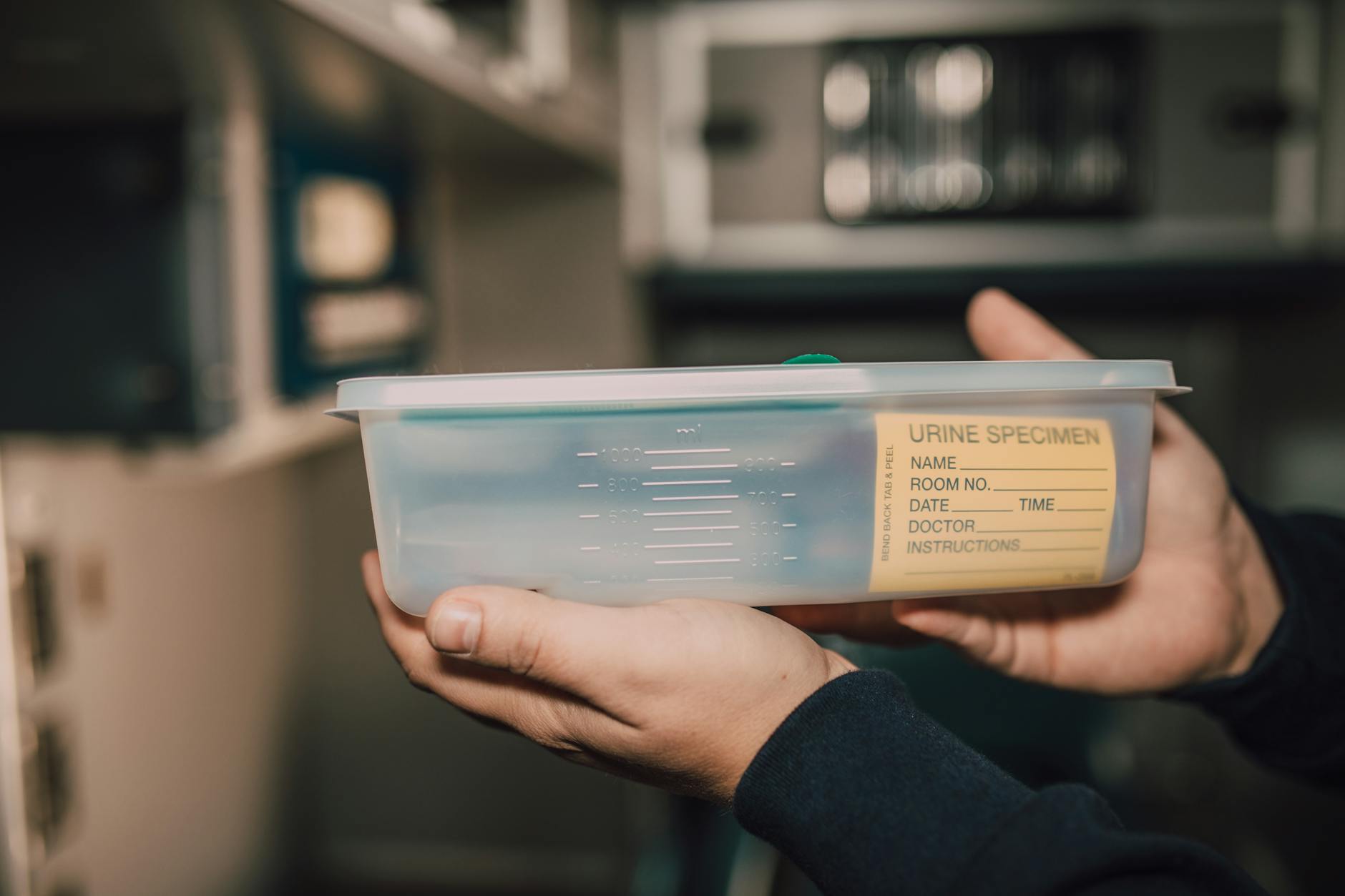
Patients usually bring this up at the very end of an appointment, staring at their shoes. They hand me a sample cup and apologize for the way it looks.
1. The Afternoon Desert
Dehydration concentrates urochrome. It stops looking like water and starts looking like unfiltered apple cider. Most articles will tell you cloudy urine means a severe infection. That framing misses the point entirely. Usually, you just haven’t had a glass of water since breakfast. The kidneys hoard fluid.
2. A Graveyard in the Bladder
When bacteria invade the urinary tract, the immune system sends white blood cells to fight them. Those cells die. Millions of them wash out in the urine, creating a murky suspension we call pyuria. Textbook cases talk about burning and urgency. In the exam room, an older woman will sit on the table and say, “I just feel heavy down there, and my pee smells like old trash.” That happens all the time. General practitioners often dip a stick in the liquid, see nitrates, and prescribe Macrobid. But what gets missed at the GP level versus the specialist level is the recurrent nature of biofilms. Bacteria hide in the bladder wall lining. We treat the floating bugs, but the anchored ones wait a month and bloom again. I smell a pseudomonas infection before I even look at the dipstick. It has this sickly sweet, grape-like odor that fills the tiny clinic bathroom. (And yes, we actually learn to diagnose by smell during residency, though nobody likes to admit it). We have to culture that sample. A culture tells us exactly what bacteria survived the first round of drugs. Giving standard antibiotics for a resistant bug just clears out the competing flora. It gives the bad actors more room to multiply. You end up with a toilet bowl that looks like muddy water and a fever that spikes at midnight.
3. The Steak Dinner Aftermath
Eating a massive meal heavy in meat or dairy changes the pH of your waste. Excess phosphorus forms tiny crystals. They precipitate out when the liquid cools in the bowl. A guy came in last week panicking. “It literally looked like someone poured milk into the toilet,” he told me. He thought his kidneys were shutting down. I asked what he ate the night before. A massive ribeye and a milkshake. We do not fully understand why some people precipitate calcium phosphate so aggressively while others eating the exact same meal do not. Genetics dictate how your tubules handle minerals. The cloudiness is just chalk dust in suspension. It clears up by the next void.
4. The Anatomy Overlap
What lands in the toilet is not always from the bladder. Vaginal discharge frequently mixes with the stream. A yeast infection produces thick secretions that turn clear liquid murky upon contact. Is it a urinary issue or a gynecological one? Usually the latter.
The sample gets contaminated on the way out.
5. The Infection Nobody Mentions
Sexually transmitted infections cause inflammation in the urethra. Urethritis produces a purulent discharge. In men, this is often the first sign something went wrong. The morning stream pushes out the pus that gathered overnight. The textbooks describe a clear droplet at the meatus. What I actually see is a terrified twenty-something who thinks he caught an incurable disease because his morning urine looked like a snow globe. We run a nucleic acid amplification test. It comes back positive. Two weeks of doxycycline clears the infection. Leaving it untreated invites pelvic inflammatory disease or epididymitis down the line.
6. Scratching the Pipes
A stone doesn’t have to block the ureter to cause trouble. Sometimes a jagged piece of calcium oxalate sits in the renal pelvis and just vibrates. It scratches the delicate lining. Blood and mucus mix together. Microscopic bleeding won’t turn the water red. It turns it hazy. I caught a uric acid stone in a patient just last month before the scanner even confirmed it. He was pacing the exam room, unable to sit still, pressing his thumb into his right flank. That restless pacing is the absolute giveaway.
A back pain patient lies perfectly still, but a stone patient dances.
His urine was murky, not from infection, but from the sheer trauma of a jagged rock dragging against the ureter walls. Red blood cells, white blood cells, and shed epithelial cells form a thick debris field. We give the patient a plastic funnel with a screen at the bottom. We strain the output to catch the gravel for chemical analysis. Knowing what the stone is made of dictates how we prevent the next one. When the rock finally drops into the bladder, the pain vanishes immediately. But the ureter lining takes days to heal from the abrasive trauma. Until it does, the liquid remains turbid. You just wait out the mucosal shedding.
7. Bubbles That Linger
Patients confuse cloudy with foamy. Foamy urine points to protein. Your kidneys have filters called glomeruli that should keep large molecules inside the blood. When those filters take damage from high blood pressure, albumin leaks through. It hits the toilet water and whips up like egg whites. If the foam stays after you flush, that’s protein. Cloudiness settles to the bottom. Foam rides the top. Sometimes they happen together, making the bowl look like a dirty pint of beer. That combination warrants a nephrology consult.
8. The Backwards Route
The bladder neck usually clamps shut during climax. Sometimes it stays completely open. Semen takes the path of least resistance and shoots backward into the bladder instead of out the urethra. Medications for enlarged prostates cause this constantly. Tamsulosin relaxes the smooth muscle so a man can pee. But it also relaxes the gate that keeps semen out of the bladder. The next time he empties his bladder, the urine is thick and turbid. It alarms them. It is entirely harmless.
9. A Swollen Gland
Prostatitis throws a massive wrench into male plumbing. An inflamed prostate leaks white blood cells directly into the lower tract. You get a deep, aching pain behind the scrotum. The urine turns hazy from the glandular secretions mixing into the stream. We treat it with long courses of antibiotics, sometimes for a month or more. Drugs penetrate prostatic tissue very poorly. The blood-prostate barrier keeps the medicine out. Which means the ache just lingers while the urine stays murky. Men get incredibly frustrated by how slow the recovery is. The cloudiness persists long after the initial fever breaks.
10. The Parasite’s Toll
This is incredibly rare in Western clinics. Lymphatic fluid normally travels in its own closed loop. Rarely, a fistula forms between the lymphatic vessels and the kidneys. Chyle leaks in. The urine turns milky white and thick. It actually looks exactly like skim milk. You see this in patients who lived in tropical areas with parasitic filariasis. Wuchereria bancrofti worms block the lymph nodes. The pressure builds until a vessel bursts into the urinary tract. There is no burning. There is no urgency. Just a sudden, shocking change in fluid dynamics.
Urine is simply a filtered record of what the blood no longer needs. Changing its clarity requires either altering what goes into your mouth or identifying the inflammatory debris shedding into the stream.
Medical Disclaimer: This article is for informational purposes only and does not constitute professional medical advice. Always consult a qualified healthcare professional before making changes to your health routine.




