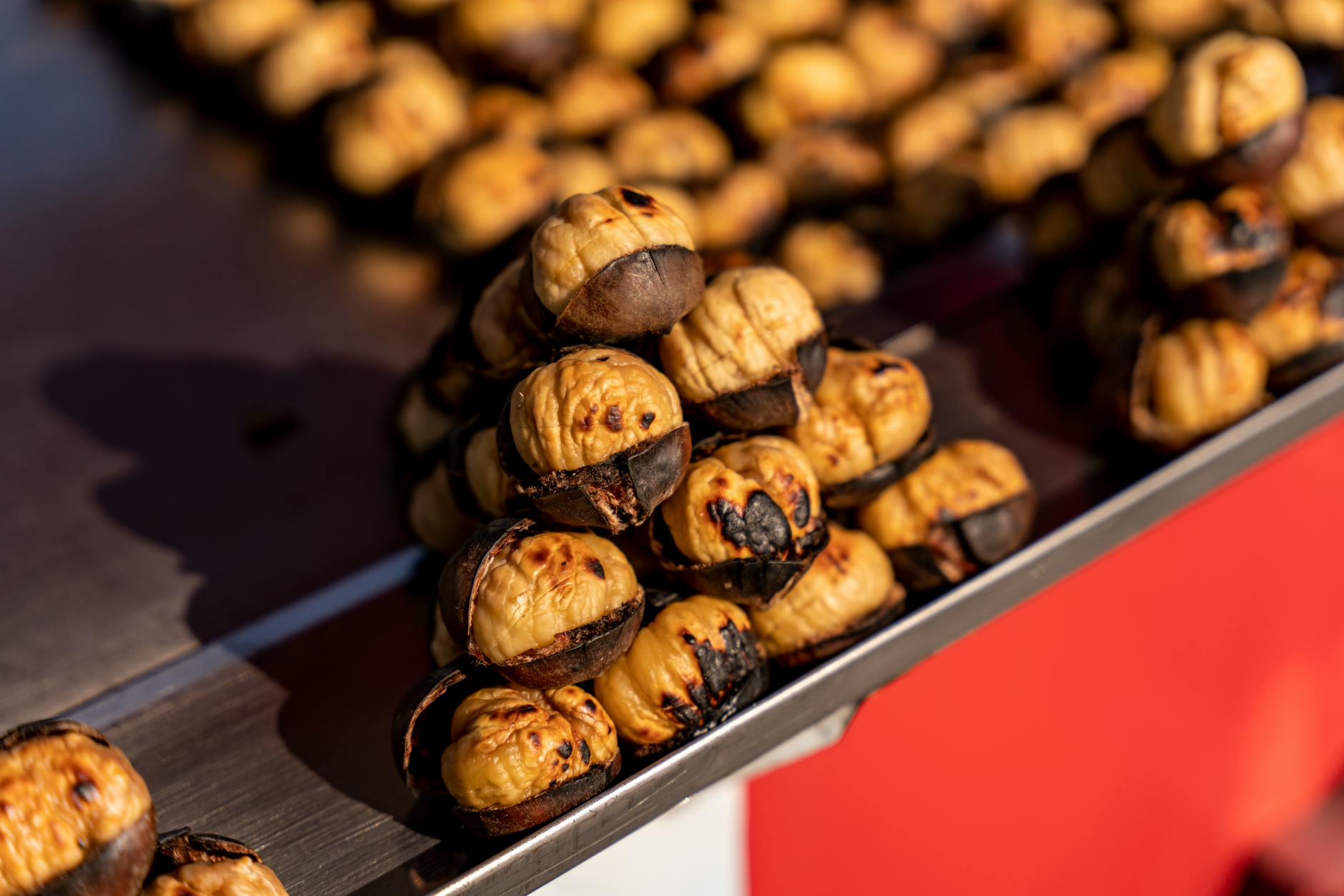
Chestnuts act more like a grain than a nut. I spend half my week untangling dietary misconceptions for patients trying to manage their metabolic health. Treating them like a handful of almonds is a fast track to blood sugar chaos.
1. The macronutrient deception
They are mostly water and complex carbohydrates. People grab a handful assuming they are getting a dense dose of fats and proteins. They aren’t. You are basically eating a sweet potato in a shell. This changes how you must account for them in a meal plan.
2. A collision with low-carb diets
At the primary care level, dietary advice for prediabetes is often just a printout handing them a list of ‘good’ nuts. In an endocrinology clinic, we have to deconstruct exactly which nuts they mean. A man sat in my office last month frustrated with his continuous glucose monitor. “I’m eating nuts all day but my sugars are still climbing,” he told me. He had switched to roasted chestnuts for his afternoon snack. Why do we care about starch in a nut? Because your pancreas certainly does. Chestnuts deliver heavy concentrations of starch with almost zero fat to slow down the absorption. The textbook says chestnuts are a low-fat energy source. In the exam room, they are the reason a patient on a rigid low-carb diet is unknowingly sabotaging their own progress. But they aren’t harmful. You just have to treat them like a starch. When you eat almonds, the fat blunts the glycemic impact. With chestnuts, the digestion is rapid. I watched his glucose curve flatten out perfectly once we moved that snack to immediately after his evening walk.
3. Ascorbic acid in an unusual shell
You do not expect to find ascorbic acid inside a hard brown shell. Yet they carry enough of it to rival some citrus fruits. Heat destroys a fraction of this during roasting. Boiling them preserves a bit more of the water-soluble vitamins. The human body cannot synthesize its own vitamin C, meaning we rely entirely on dietary intake to keep our connective tissues from literally falling apart. I rarely see overt scurvy anymore. But I do see poor wound healing in older adults who live on tea and toast. Adding a starchy food like this offers a dense caloric option that actually brings utility to the table. They provide the raw structural support for skin and blood vessels. You just have to peel them properly first.
4. The latex cross-reactivity
People with latex allergies sometimes react to chestnuts. It is a cross-reactivity issue involving similar plant proteins. If you break out in hives from kiwi or bananas, approach this food cautiously. (Your immune system is notoriously bad at distinguishing between structurally similar molecules).
5. Mechanical digestion mechanics
Fiber comes in two distinct forms. Chestnuts provide a heavy dose of the insoluble type. This adds bulk to stool. I spend entirely too much time discussing constipation with patients who rely on processed fiber supplements. Whole foods do this job better. The matrix of the plant cell wall dictates how water is drawn into the colon. You chew the nut, the fibrous structure survives the stomach acid, and it sweeps through the lower intestine. It is mechanical digestion at its most basic level. Just drink water with them. Eating dense insoluble fiber while dehydrated creates a concrete block in your gut.
6. Phenolic compounds as survival molecules
Most articles will tell you they are the ultimate health food.
That framing misses the point completely.
They are simply a delivery vehicle for gallic and ellagic acid. I had a woman bring in a bag of chestnut flour she bought online. “They taste like sweet potatoes, not almonds,” she said, looking confused about what to bake with it. The slightly astringent taste she noticed comes directly from the phenolic compounds. These are the same molecules that help plants survive harsh winters. In our bodies, they scavenge free radicals. We still don’t entirely understand the exact pathway that allows chestnut tannins to modulate gut bacteria without causing gastrointestinal distress. Usually, high tannin loads upset the stomach. Here, they seem to act as a prebiotic. The nutritional breakdown reveals a complex lipid profile despite the low fat content. You get trace amounts of linoleic acid locked inside that starchy matrix. They reduce oxidative stress in endothelial tissue. That helps keep your blood vessels pliable as you age.
7. Safe harbors for autoimmune guts
Gluten destroys the intestinal lining of someone with celiac disease. Finding safe starches gets exhausting for these folks. Chestnut flour is naturally gluten-free and bakes with a dense, slightly sweet crumb. I can usually tell when someone has quietly developed a mild tree nut allergy by the way they describe an itchy throat after eating walnuts, long before we run the IgE panel. Chestnuts rarely trigger that same tree nut pathway. They offer a safe harbor for a lot of sensitive guts. The flour is heavy. It won’t rise like wheat. You mix it with lighter flours to get a decent texture. It stabilizes blood sugar slightly better than pure white rice flour.
8. Regulating cellular voltage
Muscle contractions run on an electrical gradient. Potassium sits inside the cell, sodium sits outside. Chestnuts are rich in potassium, which helps maintain this delicate voltage. Patients complain about leg cramps at night. They buy expensive magnesium sprays. Often they just need more dietary potassium to flush out the excess sodium holding water in their tissues. A handful of these nuts delivers a solid dose of the mineral. Kidneys use it to regulate blood pressure. It acts as a natural diuretic. You eat the nuts, the potassium enters the bloodstream, and your kidneys respond by dumping sodium into your urine. The mechanics are beautifully simple.
9. Binding non-heme iron
Those same antioxidants that protect your blood vessels can block iron uptake. Tannins bind to non-heme iron in the digestive tract. You eat a spinach salad with roasted chestnuts, and the iron from the greens just passes right through you. I see young women with fatigue. Their ferritin levels are on the floor. They eat plenty of plants, but they combine them poorly. If you need to build your red blood cell count, keep tannin-heavy foods away from your iron sources. Squeeze some lemon juice over the meal. The acid helps break the bond.
10. Copper for structural integrity
We rarely talk about copper. It sits quietly in the shadow of zinc and iron. Chestnuts hold enough copper to support the cross-linking of collagen. Without it, your skin thins and your joints ache. It acts as a cofactor for an enzyme called lysyl oxidase. The body uses this enzyme to weave collagen fibers together into strong ropes. You cannot supplement your way out of poor structural integrity. The trace minerals have to come packaged in a whole food matrix to be absorbed efficiently. A high carbohydrate concentration with trace minerals makes them an oddity. You boil them, peel the inner skin, and eat them warm.
Treating them like a typical nut will wreck your macronutrient targets. Roast them, pair them with a clean protein, and enjoy the complex carbohydrates they actually provide.
Medical Disclaimer: This article is for informational purposes only and does not constitute professional medical advice. Always consult a qualified healthcare professional before making changes to your health routine.




