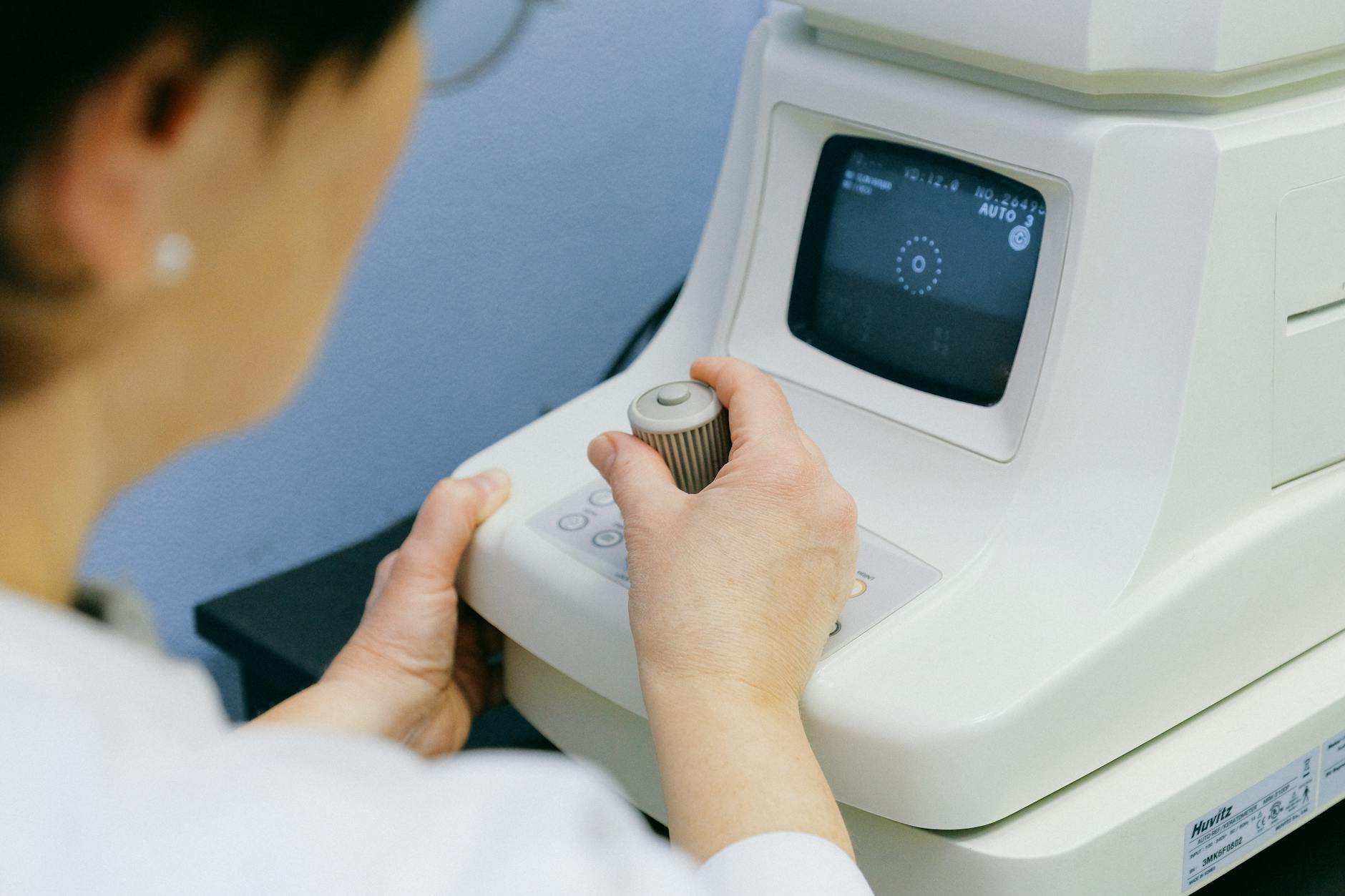
Color vision deficiency affects roughly 1 in 12 men and 1 in 200 women worldwide, yet many people go years without realizing they see colors differently. Understanding which color blind test options exist can help you catch the condition early and make informed decisions about your eye health. Here are 10 widely used tests that eye care professionals and researchers rely on today.
1. Ishihara Color Plate Test
The Ishihara test is arguably the most recognized color blind test in the world. Developed over a century ago, it uses circular plates filled with colored dots that form numbers or patterns. People with normal color vision can easily identify the hidden figures, while those with red-green deficiency often cannot. A network meta-analysis published in PubMed confirms that the Ishihara test has favorable diagnostic validity for detecting color vision deficiency. The test takes only a few minutes and is commonly performed during routine eye exams. If you have never been screened, ask your eye doctor to include this simple test at your next visit.
2. Hardy-Rand-Rittler (HRR) Test
The Hardy-Rand-Rittler test, often called the HRR test, works similarly to the Ishihara but covers a broader range of deficiencies. It uses pseudoisochromatic plates designed to detect both red-green and blue-yellow color vision problems. Research indicates the HRR test is particularly useful for grading the severity of a deficiency, not just confirming its presence. Eye care professionals often pair this test with other screenings for a more complete picture. Because it identifies blue-yellow issues that the Ishihara may miss, the HRR test adds valuable diagnostic depth. Consider requesting it if your family has a history of color vision problems.
3. Farnsworth D-15 Arrangement Test
Rather than reading numbers on plates, the Farnsworth D-15 test asks you to arrange colored caps in order. You start with a reference cap and then sort 15 additional caps by hue similarity. The pattern of errors reveals whether a deficiency exists and which type it is. Clinical evidence shows this test is especially helpful for determining whether someone’s color vision is functional enough for certain jobs. It is quick, intuitive, and does not require reading ability. If you struggle with color matching in daily life, this arrangement test can offer clear answers.
4. Farnsworth-Munsell 100 Hue Test
This expanded version of the D-15 test uses 85 movable color caps divided into four trays. You arrange them in smooth color order, and any misplacements are scored to reveal subtle deficiencies. The FM 100 Hue test is considered one of the most sensitive tools for measuring fine color discrimination. Studies suggest it can detect mild losses that simpler plate tests overlook entirely. It takes longer than most screenings, typically around 15 to 20 minutes. Eye professionals often use it when precision matters, such as evaluating artists or industrial workers.
5. Cambridge Colour Test (CAD)
The Cambridge Colour Test, also known as CAD, is a computerized screening that eliminates many variables found in printed tests. It displays a colored target on a background of random luminance noise dots on a calibrated monitor. This design prevents people from using brightness cues instead of actual color perception. According to a comprehensive review in PubMed, computerized tests like CAD offer precise, reproducible measurements of color vision thresholds. The test is widely used in research settings and occupational screening. Ask about computerized options if you want highly accurate results.
6. Anomaloscope Test
The anomaloscope is often called the gold standard color blind test. It works by having you match two halves of a circular field using mixtures of red and green light. Your specific match point and matching range reveal whether you have protanomaly, deuteranomaly, or normal vision. Because it measures the actual function of your cone photoreceptors, results are extremely precise. However, the equipment is expensive and usually found only in specialized clinics. If other tests produce ambiguous results, an anomaloscope evaluation can provide a definitive answer about your color vision status.
7. AIM Computerized Test
The AIM test is a newer, rapid computerized screening that you can complete yourself. It classifies color vision deficiency by type and severity in just a few minutes. Research published in PubMed shows AIM achieves high accuracy comparable to the anomaloscope, making it a practical alternative. Because it is self-administered, it could make professional-grade screening more accessible in schools and workplaces. The digital format also reduces human error in test administration. Keep an eye out for this technology at your local eye care provider.
8. Lantern Tests
Lantern tests were originally developed for maritime and aviation screening. They display pairs of colored lights at varying distances and ask you to identify the colors. The Fletcher Lantern test and the Farnsworth Lantern test are among the most recognized versions. These tests focus on practical color recognition rather than theoretical thresholds. They help determine whether someone can safely distinguish signal lights in real-world conditions. If your career involves transportation or safety-critical color identification, you may encounter a lantern test during occupational screening.
9. CFCA Automated Method
The Color Field Correction Analysis method, or CFCA, is a recent innovation in automated screening. It uses full-color lighting and computational analysis to diagnose color vision deficiency quickly. According to research in PubMed, the CFCA method provides accurate results consistent with the D-15 test in under five minutes. Its automated nature reduces the need for highly trained administrators. This makes it a promising tool for large-scale screening programs. Watch for CFCA-based testing as it becomes more widely available in clinical settings.
10. Online Color Blind Screening Tools
Numerous websites and apps now offer digital versions of popular color blind tests. These tools typically simulate Ishihara plates or arrangement tasks directly on your screen. They can be a helpful first step if you suspect you have a color vision issue. However, results depend heavily on your screen’s calibration, brightness, and color accuracy. No online test should replace a professional evaluation from a qualified eye care provider. Use these tools as a preliminary check, and always follow up with a clinical color blind test for confirmation.
Color vision testing has come a long way, from printed plates to sophisticated computerized tools that rival the gold standard anomaloscope. Whether you are screening for the first time or monitoring a known deficiency, understanding these options helps you choose the right path. Schedule a comprehensive eye exam with your optometrist or ophthalmologist to get an accurate, personalized assessment.
Medical Disclaimer: This article is for informational purposes only and does not constitute medical advice. Always consult a qualified healthcare professional before making health decisions.




