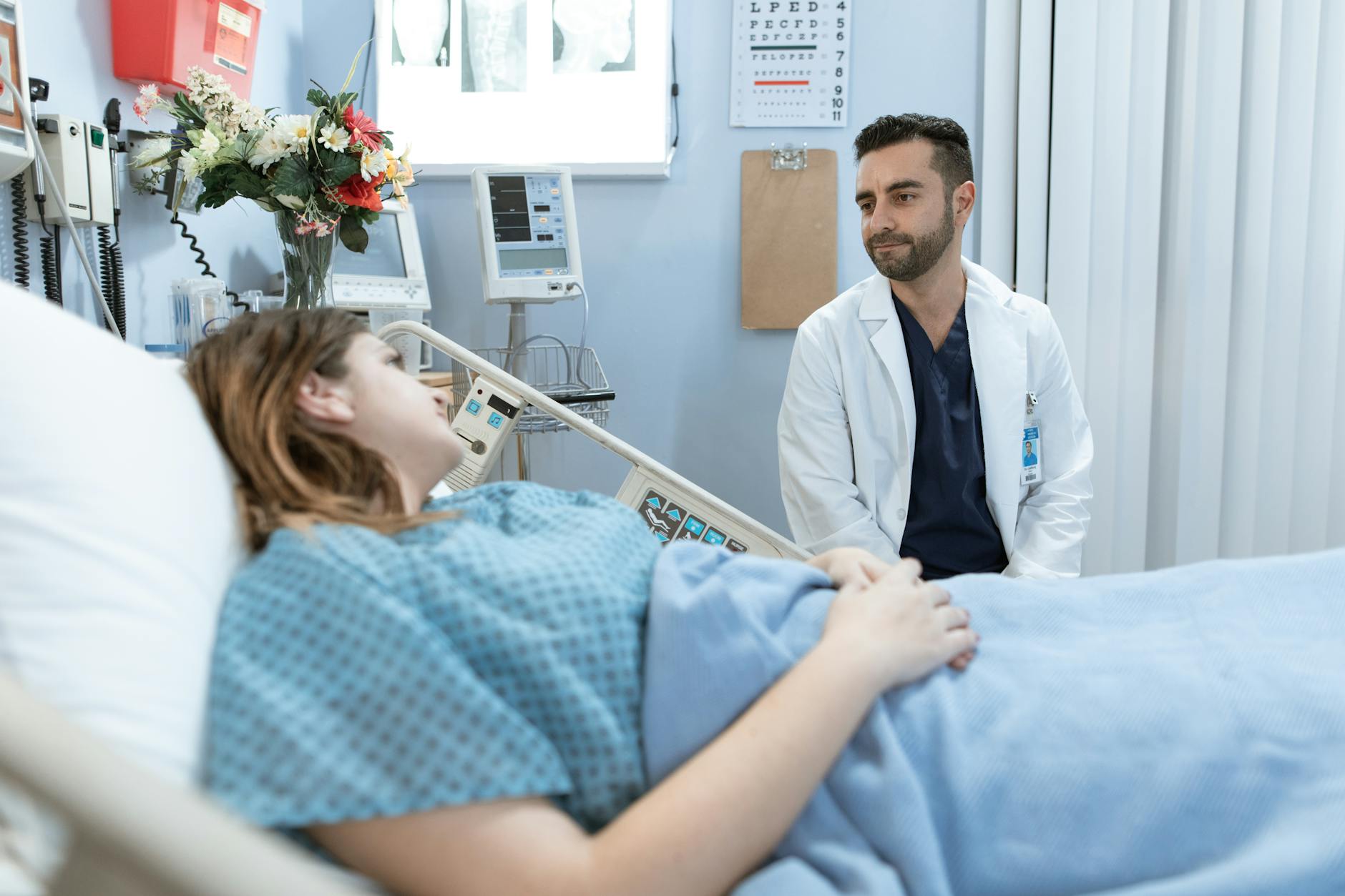
The cast room smells like damp plaster and iodine. I walked in to check a standard tibial fracture reduction, and the young man on the table was sweating through his gown. He looked at me and whispered that his leg was exploding.
1. The textbook lied about your pulse
Most articles will tell you pulselessness is a hallmark sign. That framing misses the point entirely. If I’m waiting for your foot to lose its pulse, I have already waited too long and your muscle is dying.
The arteries are deep and robust.
They keep pumping long after the micro-vessels feeding the nerves have collapsed. Don’t wait for a cold white foot.
2. The violence of a passive stretch
I always check the toes first. You stretch the big toe upward, extending the muscle belly trapped inside the anterior compartment of the calf. A normal broken leg hurts when you do this. But a leg with pressure building inside the fascia creates a very distinct reaction. The patient will physically launch themselves backward on the bed to get away from your hand. I saw this in a twenty-year-old soccer player three hours before the Stryker needle confirmed his pressure was 45 mmHg. The textbooks call it pain with passive stretch. I call it the reflex of a dying nerve begging for oxygen. And it happens fast.
3. The morphine ceiling
“I took the pills but it feels like you gave me Tic Tacs.” That was a mother of two who had a seemingly minor crush injury to her forearm from a car door. Normal bone pain responds to opioids. Ischemic pain doesn’t care about your fentanyl. The pressure inside the fascial envelope cuts off venous return, meaning blood goes in but can’t get out. The limb swells until the pressure equals diastolic blood pressure. At that moment, the tissue starts suffocating. We give dose after dose of narcotics, and the heart rate stays at 130. That resistance to medication is a blaring siren.
4. Wood beneath the skin
Touch the calf. It feels like a block of mahogany. Fascia is the tough casing around muscle groups, and it has absolutely zero stretch. When bleeding happens inside, the compartment turns into a sealed pressure cooker. You can tap the skin and it feels completely rigid.
5. The urgent care misstep
This is where things get missed at the GP level versus the specialist level. A patient walks into a walk-in clinic complaining of severe shin pain after a marathon. The physician sees a runner, notes the absence of a fracture, and diagnoses shin splints or a stress reaction. They prescribe rest and ice. But chronic exertional compartment syndrome behaves differently than a broken bone. The muscle expands by twenty percent during heavy exercise. If the fascia is unusually tight, that normal expansion chokes off the blood supply. The patient goes home, elevates the leg, and the pain recedes. They try to run next week and the exact same agonizing pressure returns at mile two. We actually test for this by making patients run on a treadmill in the clinic until they hurt, then jamming a pressure monitor into their leg. It sounds barbaric.
(And honestly, it is a little barbaric).
But capturing that peak pressure is the only way to prove the fascia is strangling the muscle. The delay in getting from a well-meaning generalist to an orthopedic clinic can take months, leaving the patient convinced they just have bad shins. We don’t fully understand why some athletes develop this fibrotic, unyielding fascia while others run ultra-marathons with zero issues. Genetics probably play a role, along with biomechanics we have yet to map out.
6. Interstitial math
Diagnosing this requires numbers. We use a handheld device that looks like a caulking gun with a thick needle attached. We plunge it directly into the muscle belly to measure the interstitial pressure. According to a 2014 trauma review, development is multifactorial and delayed diagnosis often stems from mental status changes or regional anesthesia masking the symptoms. If you have an epidural running, you can’t feel the warning signs. That makes the needle our only objective truth. We inject a tiny bit of saline and wait for the monitor to spit out a number. Anything above 30 millimeters of mercury means we are calling the operating room.
7. The brutal necessity of the scalpel
There is no pill for this.
You can’t massage it away. The only treatment is a scalpel. We make two massive incisions down the length of the lower leg to slice open the fascia and release the pressure. The muscle literally bulges out of the wounds the second the blade passes through. We don’t sew it back up. We leave the leg wide open, covered in a vacuum dressing, until the swelling subsides days later. Clinical guidelines dictate prompt surgery when the pressure gradient drops below 30 mmHg. The scarring is permanent. The relief is instantaneous.
8. The danger of a clean x-ray
Fractures cause about three-quarters of these cases. The rest come from places you would never expect. I have seen it from a tight bandage wrapped by a well-meaning coach. I have seen it in a heroin user who passed out on a hard floor with his arm pinned under his chest for twelve hours. The crush injury destroyed muscle cells, flooding the compartment with fluid and triggering the cascade. Even a bad snake bite can dump enough venom and swelling into a limb to compromise the vascular bed. When a patient presents with massive swelling but clean x-rays, the index of suspicion must remain incredibly high. The danger is that a clean image provides a false sense of security. The bones are fine, so everyone relaxes. The nurses step out. The lights get turned down. Meanwhile, the clock is ticking on the tissue. Muscle can survive about four hours of ischemia before irreversible damage begins. By hour eight, the damage is permanent. By hour twelve, you are looking at an amputation. This is why orthopedic residents don’t sleep when they are on call. They are walking the halls, poking legs, waking patients up just to ask them to wiggle their toes.
9. The sensory nerves die first
What happens when the pressure starts winning? You lose feeling. The webbing between the first and second toe is usually the initial casualty in a lower leg compartment syndrome. The deep peroneal nerve runs right through the anterior compartment, and it is highly sensitive to oxygen deprivation. A patient will tell me their foot is asleep. “It feels like I’m wearing a heavy wool sock, but I’m barefoot.” You grab a paperclip or a broken tongue depressor and lightly drag it across the skin. They feel nothing. Motor function goes next, followed by the muscle tissue itself turning to necrotic mush.
10. Children hide ischemic pain differently
Children don’t have the vocabulary to explain ischemic pain. They just thrash. A toddler with a supracondylar humerus fracture, which is a broken elbow, is at massive risk for forearm compartment syndrome. They won’t tell you their passive stretch hurts. They will simply scream every time you walk into the room. We rely on the evidence-based recommendations established for extremity trauma, which heavily emphasize agitation and increasing analgesic requirements in pediatric patients. You watch the child’s face, not the monitor. You look at how they guard the arm, trying to read a child who can’t tell you their muscle is suffocating. When the tissue dies, it releases myoglobin into the bloodstream, which clogs the kidneys and causes renal failure. The limb is gone, and the internal organs follow.
Time is the only currency that matters when fascia tightens around dying muscle. If your cast feels like a tourniquet, demand someone cut it off immediately.
Medical Disclaimer: This article is for informational purposes only and does not constitute professional medical advice. Always consult a qualified healthcare professional before making changes to your health routine.




