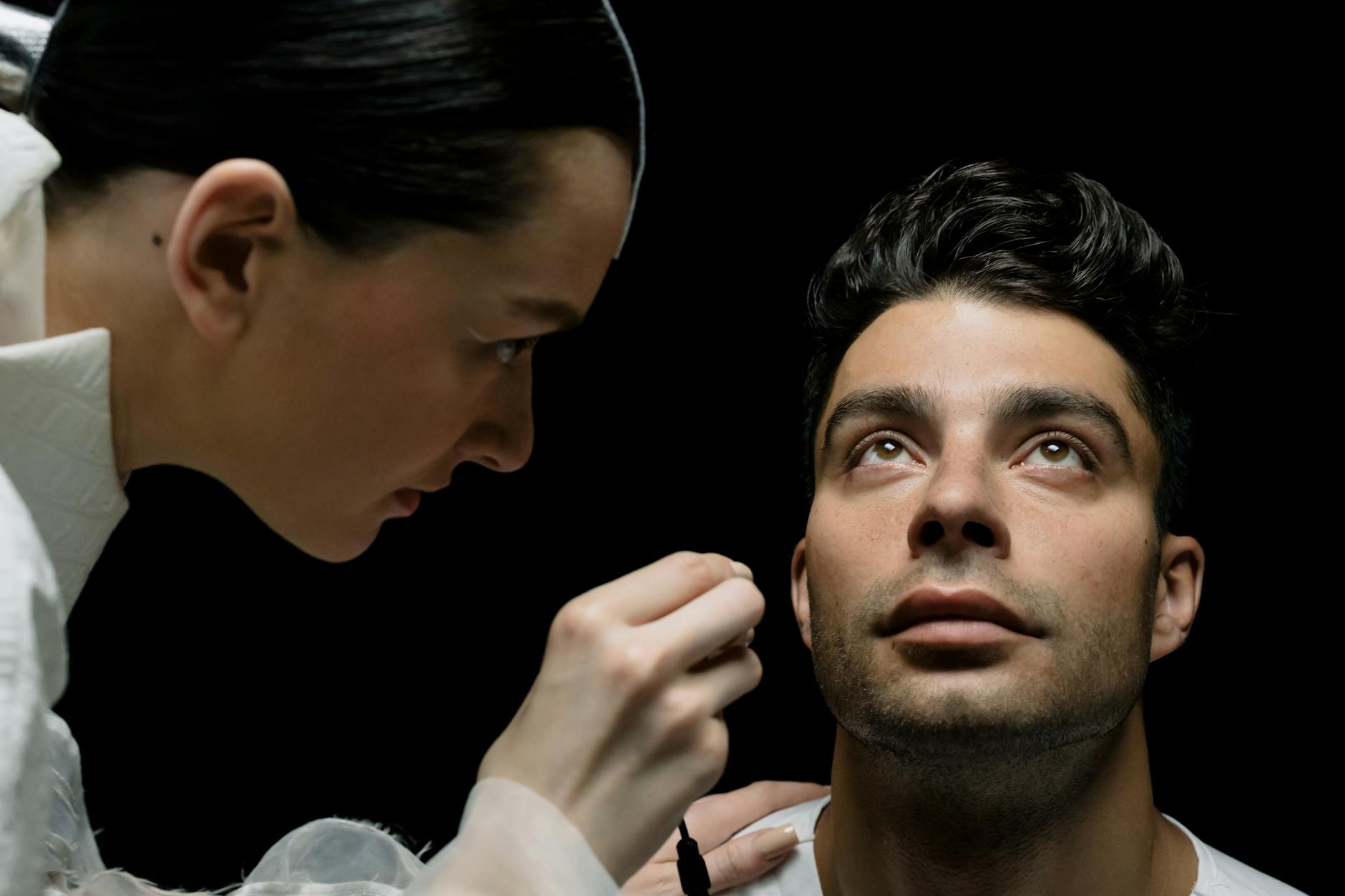
I see the swollen, angry eyelid peering at me from the waiting room before the patient even signs in. A localized infection of the eyelash follicle isn’t a threat to your vision, but it feels like a boulder trapped under your skin.
1. The geography of the swelling dictates the diagnosis
General practitioners often glance at a red eyelid and prescribe antibiotic drops reflexively. But an ophthalmologist looks at exactly where the lump sits. If the bump hangs out on the absolute edge of the lid margin, pointing outward, you have a classic external hordeolum. That’s just a hair follicle backed up with dead cells. When the swelling sits deeper inside the lid tissue, flipping the eyelid reveals something worse. Drops won’t touch that deeper infection. They simply wash uselessly over your cornea, eventually draining into your nose.
2. That white head is a trap
“It looks like a pimple, so I tried to pop it with a needle,” a young man confessed to me last Tuesday. Do not do this. The skin around your eye is aggressively thin. Squeezing forces infected pus backward into the venous drainage system of your face. That localized swelling suddenly becomes a diffuse preseptal cellulitis.
3. Heat is medicine, but you are doing it wrong
Most articles will tell you to apply a warm compress. That framing misses the point. You are not trying to comfort the eye. You are trying to melt butter. The meibomian glands lining your eyelids secrete oils that stabilize your tear film. When those glands get obstructed, the oil solidifies. A wet washcloth placed over your eye loses its thermal energy in exactly forty-five seconds.
That is practically useless.
(And yes, I know the instructions on the internet say a washcloth is fine.) You need sustained, moist heat at precisely 104 degrees Fahrenheit for a minimum of ten continuous minutes to change the viscosity of that trapped sebum. I usually recognize the chronic compress-failers the second I walk into the exam room. The affected eye is slightly crusted, but the skin around it is barely flushed, meaning they never got the tissue warm enough. I use a slit lamp to look at the gland orifices. Instead of clear olive oil, I see something resembling opaque toothpaste capping the duct. Until you melt that plug with relentless heat, the bacteria will just keep throwing a microscopic party in your eyelid.
4. The infection culprit is already living on your face
We carry immense colonies of bacteria on our skin every single day. They colonize our nostrils, our cheeks, and the base of our eyelashes. According to a StatPearls clinical review, this acute ocular infection occurs when those opportunistic bacteria find a blocked sebaceous gland. You rub your eye after touching a keyboard. You sleep in day-old mascara. The mechanical friction introduces normal surface flora into a dark, warm, oxygen-deprived tunnel. The bacteria multiply rapidly. Your immune system dispatches white blood cells to the scene, and the resulting casualty of war is the painful nodule you wake up with.
5. Drops are a placebo for the anxious
Patients beg for prescriptions because leaving the clinic empty-handed feels like failure. I hand them a script for erythromycin ointment sometimes, but I know the truth. Topical antibiotics penetrate the thick skin of the eyelid poorly. They sit on the surface. The infection is walled off deep inside a gland. The ointment lubricates the eye, which feels vaguely soothing, but your white blood cells are doing the heavy lifting. The body encapsulates the bacteria, breaks down the debris, and eventually ruptures the abscess outward. I suppose it gives the patient a sense of control.
6. When does it stop being a stye?
Usually around week three. The sharp, localized pain disappears, leaving behind a painless, rubbery bump that refuses to leave. That is a chalazion. The active infection is entirely gone. Your immune system walled off the spilled oil with a granuloma, basically treating your own lipids like a foreign body.
7. Your stress levels are changing your eyelid secretions
“I only get these when I’m studying for finals,” a stressed nursing student told me last winter. She was absolutely right. The connection between systemic cortisol spikes and meibomian gland dysfunction is something I see constantly. Stress alters your hormone profile, which in turn changes the chemical composition of your sebum. The oils become thicker, more prone to stagnation.
Why exactly the glands in the eyelid are so exquisitely sensitive to these systemic shifts compared to glands elsewhere on the body is something we don’t fully understand yet. Probably something to do with the localized microvasculature, but regardless.
Textbooks describe an eyelid margin as either inflamed or quiet. The exam room reality is much messier. I see patients with perfectly white eyes who have completely non-functional glands, and patients with raging rosacea whose glands flow beautifully. When you are sleep-deprived and living on caffeine, your blink rate drops by half. You aren’t mechanically pumping the oil out. The stagnant fluid solidifies, the staph bacteria move in, and the cycle repeats.
8. Tea bags offer a false sense of security
People love putting green tea bags on their eyes. A 2017 review by Bragg and colleagues defines a hordeolum as a localized infection requiring precise thermal dynamics to resolve. A wet tea bag holds heat for about two minutes. Tannins in the tea might act as a mild astringent on the skin surface, but they are not penetrating the tarsal plate to reach the infected gland. You are just making your face smell like bergamot. A microwaveable eye mask filled with flaxseed or silica beads is the only tool that maintains the necessary temperature gradient.
9. Makeup acts as a microscopic cork
Eyeliner applied to the waterline is an absolute nightmare for ocular health. You are dragging a waxy, pigmented pencil directly over the microscopic exit holes of your lipid glands. It creates a physical barrier. The gland continues producing oil behind the plug. Pressure builds. A 2012 clinical review by Lindsley and colleagues notes that while these bacterial inflammations might resolve spontaneously, unresolved cases turn into chronic granulomas. Every time you leave makeup on overnight, you roll the dice. The waxy debris mixes with dead epithelial cells, creating an impenetrable seal over the follicle.
10. Surgery is a brutal, unglamorous mechanical fix
When heat fails and the nodule hardens, we intervene with a blade. We flip the eyelid inside out, clamp it with a terrifying metal ring to stop the bleeding, and slice vertically into the tarsal plate. There is no delicate laser involved. We use a tiny curette to aggressively scrape out the gelatinous, trapped debris. It sounds medieval because it is. We don’t even use stitches afterward. The wound just bleeds for a bit, then closes on its own.
Medical Disclaimer: This article is for informational purposes only and does not constitute professional medical advice. Always consult a qualified healthcare professional before making changes to your health routine.




