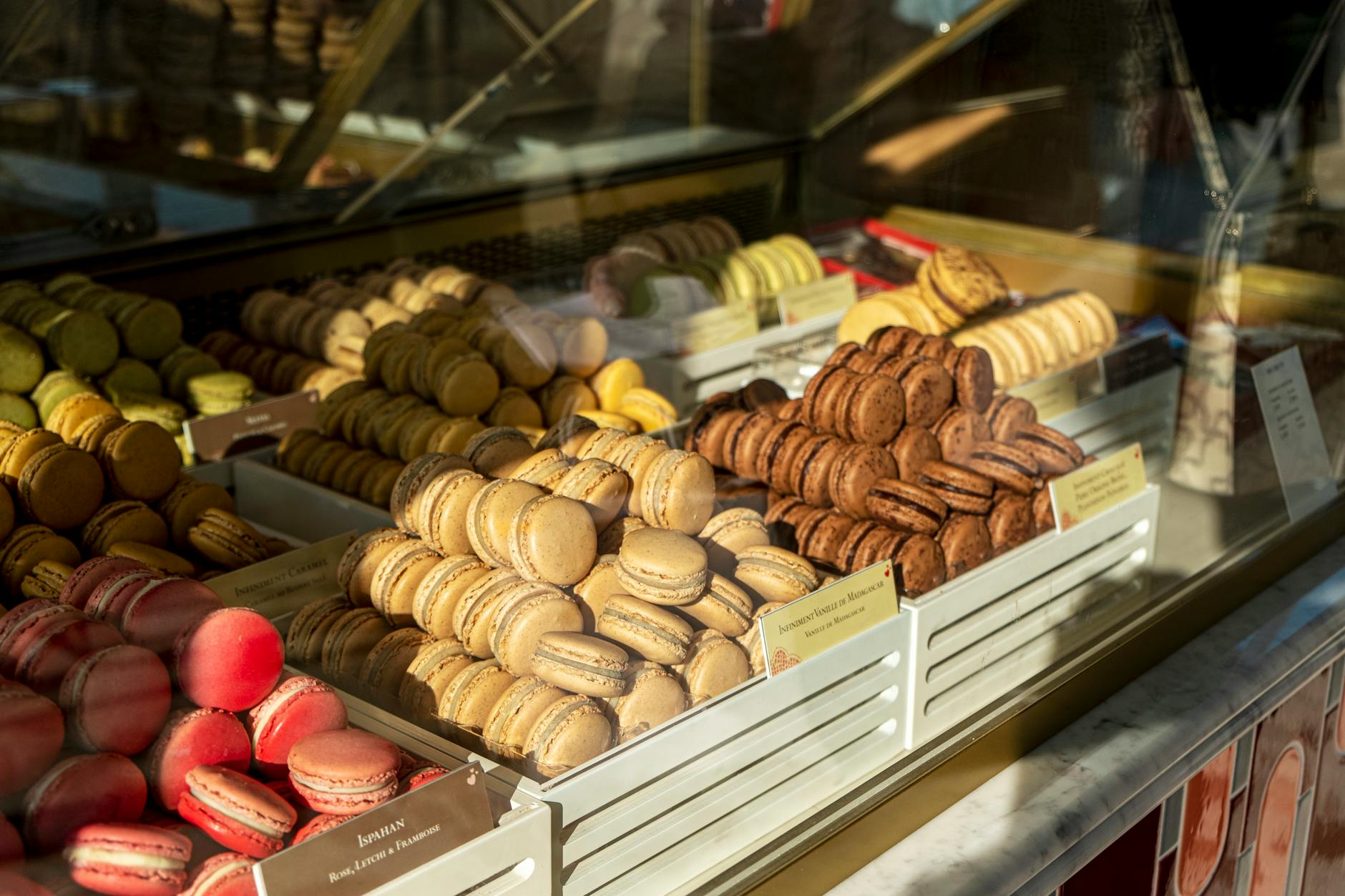
The average bakery window sells a colorful lie about what constitutes a safe dessert for autoimmune and metabolic patients. I spend a ridiculous amount of my week explaining why a pastry made entirely of nuts and egg whites is still wreaking havoc on blood glucose.
1. The Celiac blind spot
General practitioners often hand newly diagnosed celiac patients a basic list of forbidden grains and send them home. That leaves people wandering into bakeries assuming any almond-based pastry is an automatic green light. “I only had two of those little fancy cookies, the ones without flour, but my stomach feels like I swallowed broken glass.” I hear that exact phrase, or variations of it, constantly. What gets missed at the primary care level is the brutal reality of cross-contamination in commercial kitchens. The macaron itself lacks wheat. But the air in that bakery is literally dusting every surface with flour. A pastry chef uses the same piping bags or rests the drying shells on racks right next to the croissants. You are eating microscopic wheat fragments. I can usually spot this before the follow-up tTG-IgA lab results even come back. The patient walks in looking exhausted, rubbing the side of their abdomen, complaining of joint ache despite a strict diet. They think they are failing. They aren’t failing at all, they just trusted a bakery that doesn’t understand cross-reactive protein exposure.
2. Crashing the insulin party
Most articles will tell you almond flour makes these treats a low-glycemic alternative. That framing misses the point entirely. You are eating whipped sugar. The outer shell is roughly fifty percent refined sucrose by weight. Your pancreas does not care that the sugar is held together by premium ground nuts. It just sees a massive, immediate glucose load hitting the bloodstream.
3. Walnut oilcake interventions
We actually see food scientists trying to fix the nutritional dead zone of these pastries. The Journal of Food Science and Technology published an interesting trial in 2020 by Korus and colleagues. They found that substituting almond flour with up to 10% walnut oilcake powder drastically increased the dietary fiber and total phenolic content. Patients ask me if they should bake these at home to make them healthier. You get a slight bump in antioxidant capacity, and data from that same trial notes it maintains acceptable sensory qualities. But you still have to contend with the sugar content required to form the meringue structure. The chemistry of baking binds our hands a bit here.
4. The hidden albumin trigger
Textbook descriptions of food allergies focus heavily on the rapid, anaphylactic presentation. You eat the trigger. Your throat swells. You use an EpiPen. In the exam room, egg white intolerance looks far more insidious. A patient will eat a macaron and develop delayed, painful bloating or an eczema flare three days later. Ovalbumin is a notoriously tough protein for compromised guts to break down. We do not fully understand why some adults suddenly lose tolerance to egg whites after decades of eating them without consequence. The mechanism likely involves a shift in the microbiome. The exact pathway remains blurry.
5. Eating the rainbow literally
Those vibrant blues and piercing reds do not exist in nature. Your liver has to process every synthetic azo dye used to achieve that exact pastel aesthetic. Some sensitive individuals report mild histamine reactions to these petroleum-derived colorants.
It is a hefty metabolic price for aesthetic appeal.
6. The almond load
People underestimate just how many almonds are packed into a single bite of these pastries. You wouldn’t sit down and eat three handfuls of raw almonds in two minutes. Yet that is precisely the volume of nut protein you ingest when you eat three macarons. “My throat gets this weird, itchy tickle whenever I eat them, but I figured it was just the sugar burning.” A young woman told me that last month right before we discovered her developing tree nut allergy. Nut allergies do not always present at birth. They can escalate rapidly in your twenties or thirties. The intense concentration of almond protein in the shell delivers a massive allergenic load to the immune system all at once. And baking does not denature almond proteins enough to render them harmless. We see this escalating cross-reactivity with birch pollen allergy, too. If your mouth feels strange after eating raw apples or cherries, concentrated almond paste might provoke a similar oral allergy syndrome.
7. The dairy vehicle inside
Does the filling actually matter for your digestion? Absolutely. The shells might be dairy-free, but the center is almost always a butter-heavy cream or a heavy cream-based ganache. Lactose intolerance is incredibly common. But the fat content is the real gut disruptor here. High doses of saturated dairy fat combined with pure sugar accelerate gastric emptying in a way that triggers rapid bowel movements for IBS patients. You are hitting the digestive tract with a hypersmolar load. Water rushes into the intestines to dilute the sugar, while the fat triggers intense gallbladder contractions.
8. A trick of the eye
They look light and airy. They feel practically weightless in your hand. That physical lightness tricks the brain into assuming the caloric impact is minimal. (We see the same psychological blind spot with puffed rice snacks). A single standard-sized macaron packs roughly eighty to one hundred calories into two bites. Most of that energy comes straight from the fat in the almonds and the refined carbohydrates. You can easily consume four hundred calories while standing at a bakery counter waiting for your coffee. The brain never registers the intake because there was no chewing resistance.
9. Paralyzing the migrating motor complex
Eating concentrated sugar between meals halts the natural cleaning wave of your small intestine. This wave, the migrating motor complex, needs an empty stomach to function properly. Snacking on a high-sugar pastry mid-afternoon stops that motility dead in its tracks. Bacteria begin to ferment the stagnant food. That is why you feel so incredibly bloated by dinner time. The sugar itself feeds the bacterial overgrowth. It creates a vicious cycle of gas production.
10. Engineering the perfect reward
The texture is not an accident. Pastry chefs spend years perfecting the exact ratio of shatter to chew. That precise mouthfeel triggers a massive dopamine release in the brain before the sugar even hits your bloodstream. It is sensory engineering at its most predatory. You get the crunch of the shell, the slight chew of the meringue, and the rapid melt of the fat in the filling. Your brain logs that distinct sequence of textures as a high-value survival food. It creates an almost unbreakable craving loop. You do not just want sugar. You want that exact mechanical sensation again.
Whipped sugar and ground almonds will always act exactly like sugar and fat inside the human body, regardless of their visual presentation. Evaluate your metabolic limits honestly before treating these bakery luxuries as benign.
Medical Disclaimer: This article is for informational purposes only and does not constitute medical advice. Always consult a qualified healthcare professional before making health decisions.




