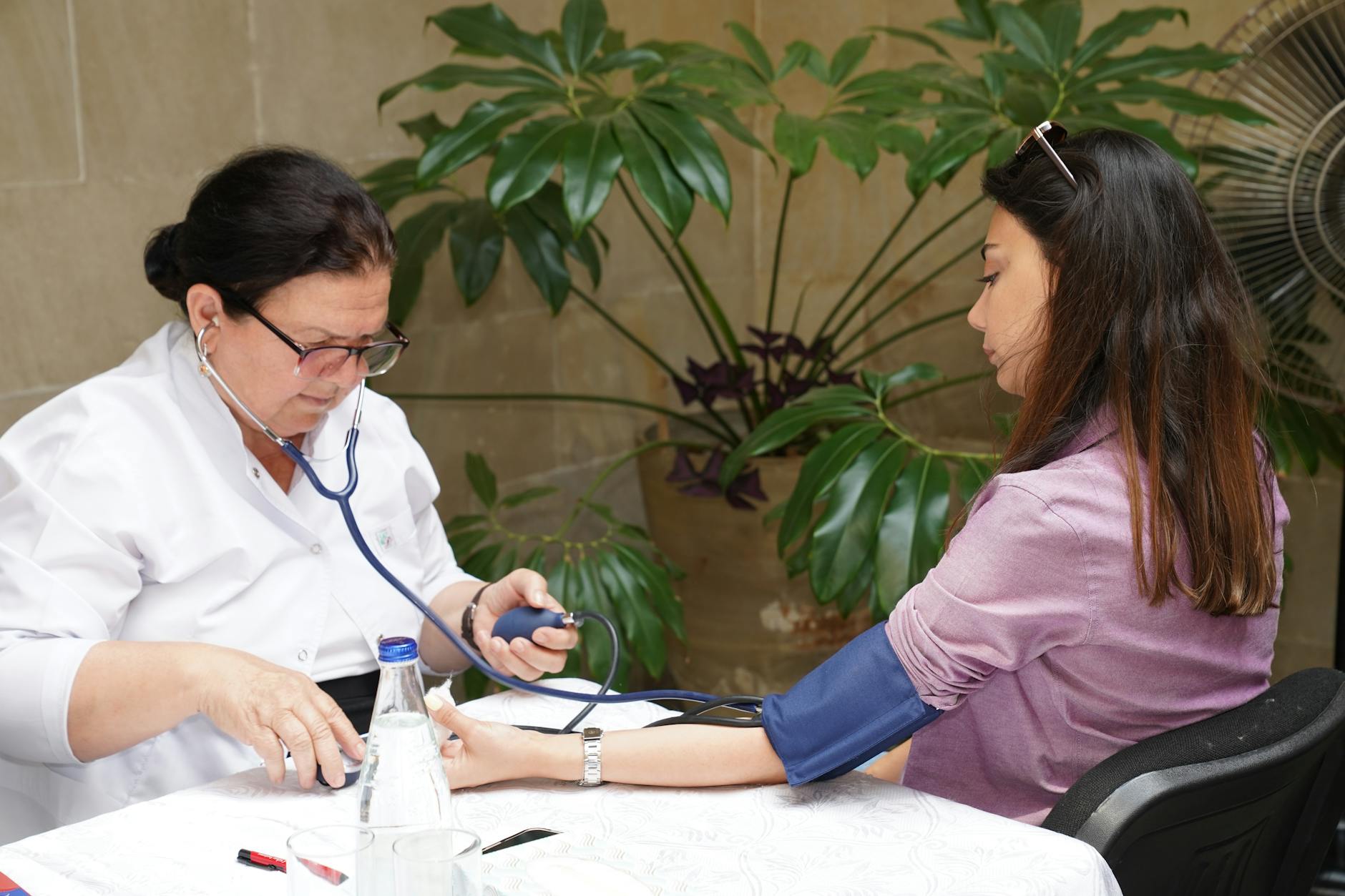
A woman sat on my exam table yesterday and told me her body felt like a wet sponge. Estrogen does that when it outpaces progesterone, pulling water into tissues and thickening the uterine lining until everything feels heavy.
1. The Uterine Lining That Won’t Stop Growing
Most articles will tell you heavy periods are a normal part of aging. That framing misses the point. When a patient says, “I’m bleeding through a super tampon every hour,” I know her estrogen is unchecked. General practitioners often brush this off as routine perimenopause. But a specialist recognizes that unopposed estrogen acts like fertilizer on the endometrium. You’re bleeding because there is simply too much tissue to shed.
2. Breasts That Feel Like Cobblestone Streets
The textbook says high estrogen causes breast tenderness. In the exam room, women describe something much more structural. “My boobs feel like they are full of gravel,” one patient complained last Tuesday. I knew her estradiol levels were sky-high before I even ordered the blood draw because of how she instinctively crossed her arms to protect her chest from accidental bumps. Estrogen proliferates ductal tissue. It forces fluid into those tiny glandular spaces until they swell into cysts.
This hurts.
And it doesn’t just happen right before your period. You wake up with it on day eight of your cycle. You go to sleep with it on day fourteen. According to the Cleveland Clinic, high estrogen levels cause symptoms including irregular periods, dense breast tissue, infertility, erectile dysfunction, and gynecomastia in men. That density is exactly what we feel on a manual exam. The tissue loses its normal suppleness and becomes a rigid matrix of inflamed ducts. We do not fully understand why some women develop massive cysts while others just get diffuse swelling under the same hormonal load. We just know the hormone is driving the architecture. You can take all the evening primrose oil you want, but until the estrogen clears, the gravel stays.
3. The Sudden Appearance of Thigh Adiposity
Estrogen directs fat storage with geographic precision. You won’t gain weight evenly. You’ll accumulate it directly on your hips and upper thighs. Fat cells themselves produce estrogen through an enzyme called aromatase, creating a feedback loop that sustains the excess. I see patients who run three miles a day and still watch their pants get tighter around the upper leg. They blame their diet. I blame their endocrine system. (It takes aggressive metabolic intervention to break an aromatase loop, not just a calorie deficit). This isn’t lazy weight gain. It is a highly active hormonal mandate.
4. A Brain Soaked in Excitatory Signals
Serotonin pathways get hijacked when estradiol dominates. Why does this make you feel like you’re crawling out of your skin? Because estrogen is an excitatory hormone. It ramps up neurotransmitter firing without the calming counterbalance of progesterone to quiet things down. Medical News Today notes that high estrogen in females causes weight gain, heavy periods, fatigue, fibroids, low sex drive, and anxiety. That anxiety is strictly chemical. It feels like a hum in your chest that you can’t turn off. Patients often end up on SSRIs because the root hormonal imbalance was never investigated. We mask the firing brain instead of clearing the hormone that started the fire.
5. Breast Tissue Growth in Men
Men convert testosterone to estrogen constantly. When that conversion runs too hot, glandular tissue develops behind the male nipple. This isn’t fat. It is a rubbery disc of actual breast tissue. You can feel the firm edge of it. Removing it surgically fixes the aesthetic issue but ignores the liver that is failing to metabolize the excess hormone.
6. The Exhaustion of Cellular Overstimulation
Fatigue from excess estrogen doesn’t feel like you need a nap. It feels like your batteries were left out in the cold. When estrogen pushes cellular growth constantly, your mitochondria burn out trying to keep up with the metabolic demand. I have watched women fall asleep in the chair while I review their lab results. They’re physically depleted by their own endocrine system. But if you look at their blood work, their thyroid is fine. Their iron is fine. Their B12 is perfectly normal. So they get told they’re just stressed. General practice completely misses the sheer energetic cost of running an estrogen-dominant body. Your uterus is building thick linings. Your breasts are swelling. Your liver is working overtime trying to conjugate the excess hormones for excretion. That takes calories. That takes massive amounts of ATP. You wake up tired. You go to bed tired. The exhaustion sits deep in your bones. Rest doesn’t fix this. Coffee certainly doesn’t fix this. Until we open up the detoxification pathways in the gut and liver to sweep the old estrogen out, the fatigue remains absolute.
7. Benign Tumors Feeding on Hormones
Uterine fibroids are simply muscles that forgot how to stop growing. They have an exceptionally high number of estrogen receptors compared to normal uterine tissue. When a patient reports pelvic pressure that makes it hard to urinate, I already suspect a fibroid pressing against her bladder. The textbook describes them as asymptomatic lumps. The reality is they bleed, ache, and distort the entire pelvic floor. Estrogen feeds them. The higher the hormone level, the faster they expand. We watch them double in size over a few months simply because a woman entered a period of anovulation and lost her progesterone buffer. The tumor eats the unchecked estrogen and thrives.
8. Tissues Holding Water Like a Reservoir
Aldosterone regulates salt and water in your body. Estrogen directly stimulates it. You retain sodium, and water follows the salt right into your tissues. Rings get stuck on fingers. Ankles swell by four in the afternoon. This edema is entirely distinct from heart or kidney issues because it fluctuates with the calendar. It peaks when estrogen peaks. I press a thumb into a patient’s shin, and the indentation stays there for three seconds. That pitting edema is literally the physical weight of unmetabolized hormones pooling in the lower extremities. You aren’t bloated from eating too much salt. You’re bloated because your kidneys are receiving false instructions from your ovaries.
9. The Collapse of Male Libido
Testosterone gets all the credit for male sexual function. But when estradiol climbs too high in a man, the entire system shuts down. The brain senses the elevated estrogen and assumes sex hormone production is adequate, so it stops sending signals to the testes to make more testosterone. It is a cruel biological trick. The man loses his morning erections. His desire vanishes. He shows up in my office asking for a blue pill. I have to explain that we don’t need to artificially force blood flow. We need to stop his body from aromatizing his androgens into female hormones.
10. The Vascular Throb Behind the Eyes
Estrogen dictates blood vessel dilation. When levels spike and crash erratically, the vessels in your brain expand and contract with violent force. This triggers a migraine. Not a mild tension headache, but a blinding throb that makes you hide in a dark room. These usually hit right before bleeding starts, when the hormone drops abruptly. Neurologists often prescribe triptans to force the vessels closed. That treats the plumbing. It ignores the hormonal signal that caused the pipes to burst open in the first place. You can keep taking pills for the pain, but the migraines will return every single month.
You cannot out-supplement a broken hormonal feedback loop. Ask for a full endocrine panel drawn on day twenty-one of your cycle to measure exactly what your liver is failing to clear.
Medical Disclaimer: This article is for informational purposes only and does not constitute professional medical advice. Always consult a qualified healthcare professional before making changes to your health routine.




