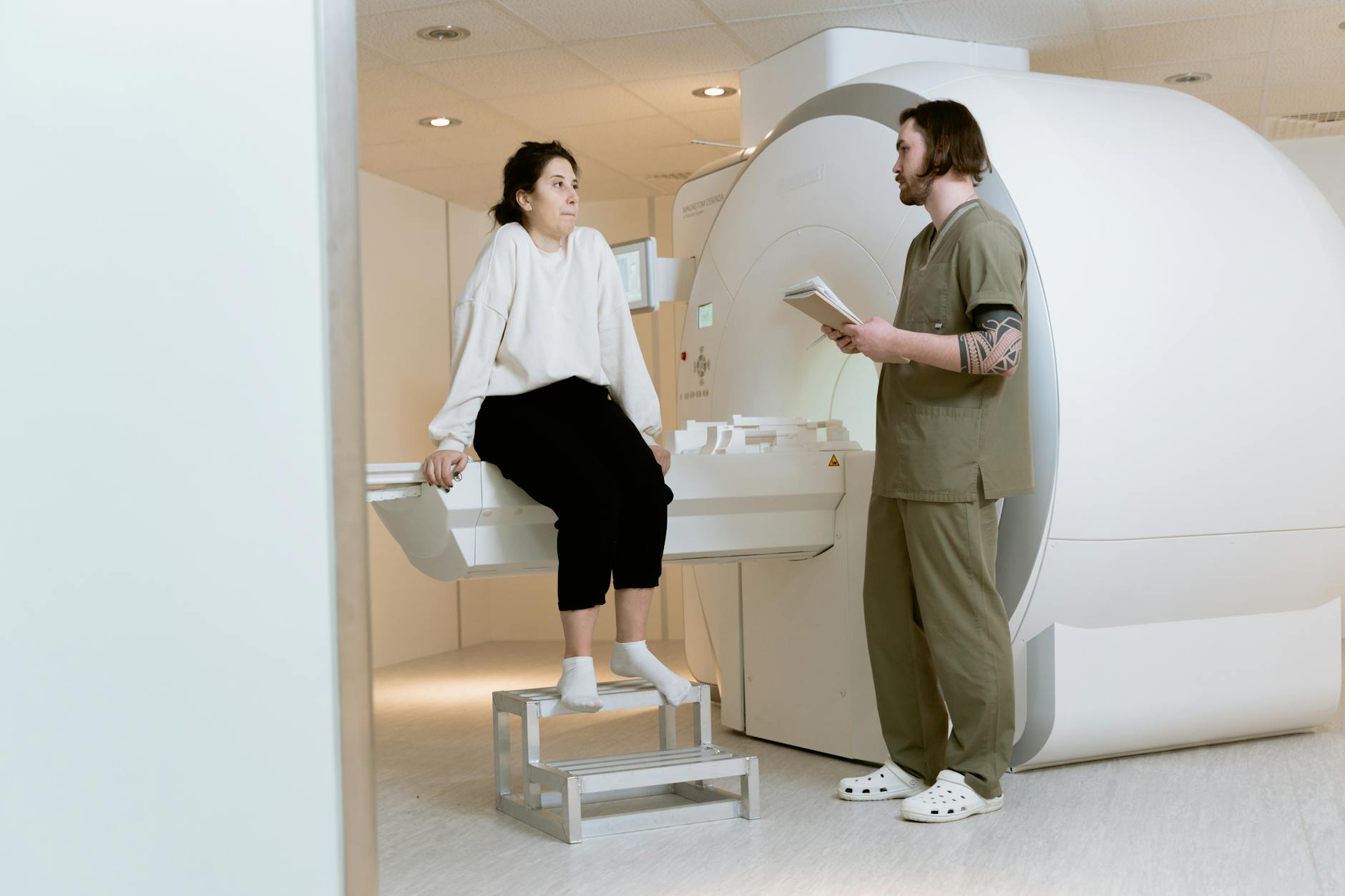
Most families sitting in my neurology clinic already suspect the worst by the time the referral goes through. Variant Creutzfeldt-Jakob disease destroys brain tissue with terrifying speed once the clinical threshold is crossed. I have watched this pathology unfold more times than I care to remember.
1. The psychiatric illusion
It always starts as a mood problem. The patient becomes irritable, withdrawn, or intensely anxious. Families assume it’s a midlife crisis or severe depression. General practitioners prescribe SSRIs. The pills do absolutely nothing because the brain is fundamentally misfolding its own architecture.
2. Persistent painful sensory symptoms
A few months after the mood shifts, the physical complaints begin. But they are bizarre. Patients describe a burning, crawling, or sticky sensation that defies normal dermatomal maps. One husband sat in my office and said, “Her skin feels like it’s buzzing constantly, and she screams if I brush against her arm.” This is dysesthesia. Early clinical reviews from 1997 documented that variant CJD linked to mad cow disease presents with prominent psychiatric features followed by persistent painful sensory symptoms. I see this play out exactly as described. The thalamus is deteriorating. Pain signals fire wildly without any external stimulus. We still don’t completely understand why the prion proteins aggregate in the precise neural pathways they do. Does the sensory cortex fail first, or is the relay station itself broken? The result is the same. The patient lives in a state of hyper-aesthetic agony that painkillers cannot touch. You prescribe gabapentin, pregabalin, or strong opiates. The buzzing continues. They rub their arms until the skin breaks. I have watched families bankrupt themselves on alternative therapies, convinced it is a rare nerve entrapment. It isn’t. The hardware transmitting the pain is physically rotting away. The cruelty of this phase is that the patient’s mind is still sharp enough to fully experience the terror of their own malfunctioning nervous system.
3. The apathy that mimics depression
Depression usually comes with sadness. Prion disease brings an aggressive, hollow apathy. The person just vacates the premises of their own life. A daughter once told me, “He just stopped caring about his garden, like the plants offended him.” At the primary care level, this gets missed entirely. A GP sees a flat affect and writes a script for fluoxetine. But a specialist looking closely sees the subtle rigidity in the facial muscles. The emotional flattening isn’t psychological. It is structural. The frontal lobes are filling with microscopic holes. The patient isn’t sad about the garden. The neural circuits required to generate the concept of caring have been physically erased. They sit in the exam room chair staring blankly at the wall, completely indifferent to the panic radiating from their spouse.
4. The startled flinch
I usually diagnose prion disease before the MRI is ordered. I will intentionally drop my metal pen on the hard clinic floor. A normal person blinks. These patients exhibit a massive, whole-body jerk. That exaggerated startle response is myoclonus. The nervous system is a live wire stripped of its insulation.
5. The mechanical breakdown of walking
Textbooks describe cerebellar ataxia as a wide-based, unsteady gait. In the exam room, it looks like a person trying to walk on ice while heavily intoxicated. The feet slap the floor. The torso sways unpredictably. They reach for walls that aren’t there. This happens because the cerebellum, the brain’s coordination center, is being systematically dismantled. Collinge and colleagues in 1996 confirmed that BSE is a fatal brain disease of cattle with a human variant linked to beef consumption that relentlessly attacks motor control. The patient knows they are falling. Their eyes register the floor coming up to meet them. They simply cannot command their legs to brace for the impact. Bruises cover their shins from repeated collisions with furniture.
6. Dementia as a late arrival
Most articles will tell you dementia is the first sign. That framing misses the point. By the time true cognitive decline sets in, the disease has already been ravaging the subcortical structures for months. Families bring the patient in because they forgot how to use the microwave or got lost driving home from the grocery store. They want to talk about Alzheimer’s. I have to look at the spouse and explain that Alzheimer’s takes years to steal a mind. Variant CJD does it in weeks. The cognitive collapse is violent. One day they are struggling to find words. A fortnight later, they cannot recognize their own children. Memory isn’t just fading. The physical storage drives are turning into a sponge. Is it just depression? Almost always, yes. But when that rapid memory loss couples with the jerky movements and the psychiatric onset, the clinical picture locks into place. There is no slow fade into the sunset here. The lights go out room by room, fast enough that the patient is often horrifically aware of their own disappearing intellect before the final curtain drops. They will sometimes look at you with wide, terrified eyes, clearly understanding that their thoughts are dissolving but entirely unable to stop the process. It is the most brutal aspect of the pathology.
7. Visual distortions and blindness
Visual processing centers rarely escape the prion spread. Patients begin complaining that the room is tilted. Colors bleed together. They reach for a cup of water and their hand grasps empty air three inches to the left. Optometrists find perfectly healthy eyes because the hardware is fine. The software processing the visual input is corrupted. Eventually, this progresses to cortical blindness.
Then the myoclonus starts.
The eyes see nothing, but the visual cortex misfires. Families notice the patient swiping at invisible objects. The brain is feeding them a false reality built from decaying neurons. Sedatives offer the only brief reprieve.
8. Choreiform movements
Involuntary movements emerge as the basal ganglia deteriorate. You will see sudden, dancing motions of the hands or a twisting of the neck that the patient cannot suppress. (Families always remember the exact week the personality shifted, even if they ignored it then.) The body is acting on its own accord. I watch patients try to sit on their own hands to stop the writhing. It never works. The motor pathways are degrading, sending chaotic signals down the spinal cord. The muscles are simply following the only orders they receive. This chorea is relentless, persisting even during light sleep cycles.
9. The loss of speech
Expressive aphasia creeps in quietly. Sentences lose their verbs. Then words are replaced by generic sounds. Eventually, the patient stops trying to communicate entirely. The vocal cords work perfectly well. The respiratory drive is intact. But the neurological bridge between a thought and the physical act of speaking has collapsed. Spencer and colleagues in 2002 established that variant CJD causes prominent behavioral manifestations early on, but the end stage is starkly silent. They lie in the hospital bed, awake. Their eyes might track you across the room. No sound escapes. You ask them to squeeze your hand, and nothing happens. The silence isn’t a choice. The motor planning required to push air through the larynx and shape it with the tongue has been completely dismantled. They are locked inside a failing machine.
10. Akinetic mutism
This final stage of the disease is a state of absolute stillness. We call it akinetic mutism. The patient cannot move voluntarily. They cannot speak. They require a feeding tube to sustain basic metabolic function. The brain has been so thoroughly hollowed out that it can no longer command the body to interact with the external world in any capacity. You walk into the room and the stillness is suffocating. The monitors beep. The ventilator hisses if we have gone that far. The person who existed a year ago is entirely gone, leaving only an empty vessel waiting for the autonomic nervous system to finally forget how to breathe. There is no recognizable consciousness left at this precipice. Family members hold their hands, searching for a squeeze that will never come. The pathology has finished its work.
Prion diseases offer no second chances once the clinical cascade begins. The only actionable step for a family facing this reality is securing palliative care immediately.
Medical Disclaimer: This article is for informational purposes only and does not constitute professional medical advice. Always consult a qualified healthcare professional before making changes to your health routine.




