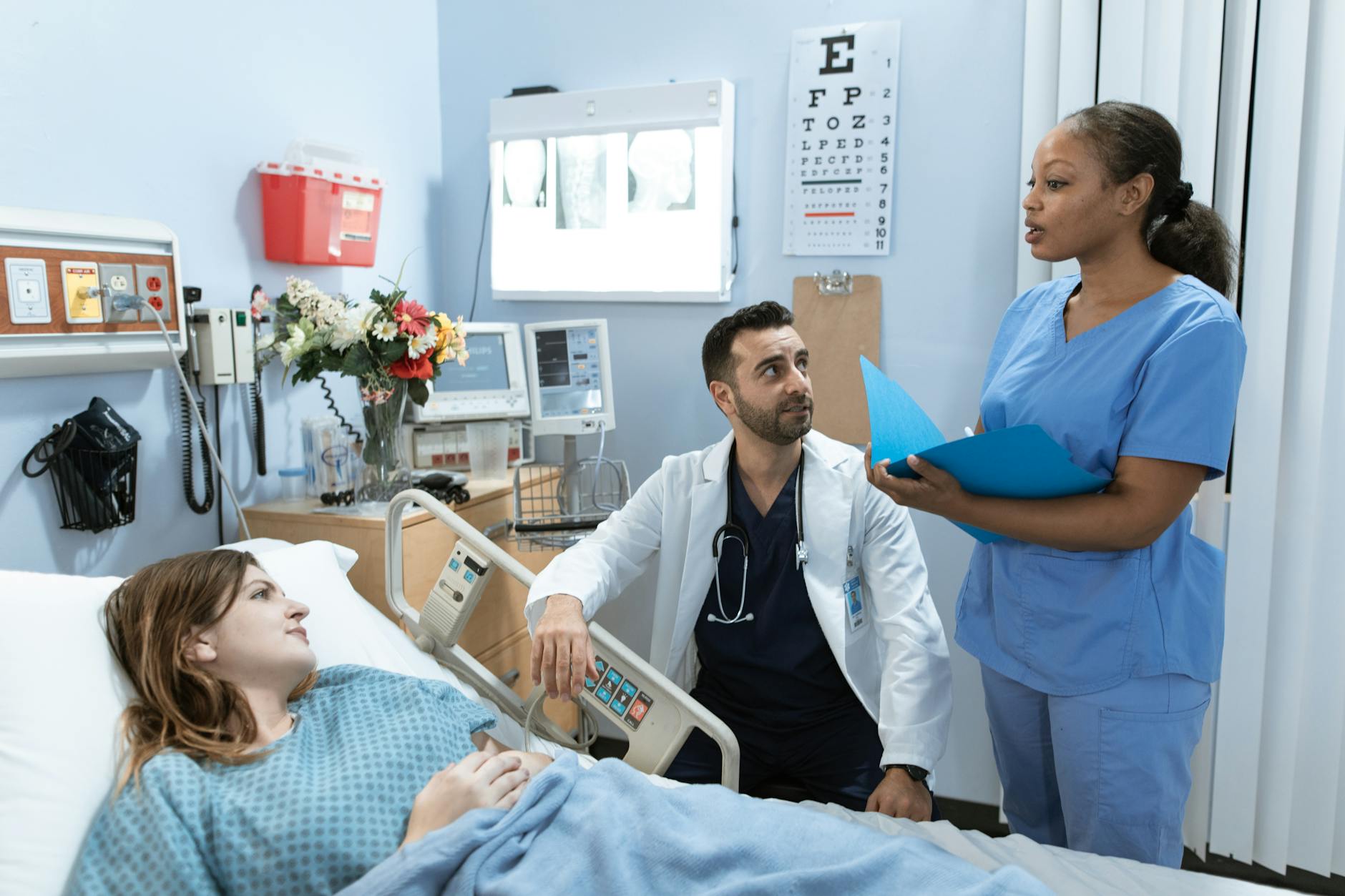
You walk into the hospital room on post-op day three and the patient is staring at the ceiling, miserable. They haven’t eaten, they haven’t passed gas, and their belly looks like a taut snare drum. The gut has simply decided to stop working.
1. The plumbing isn’t clogged
Textbooks describe this condition as a non-mechanical inhibition of gastrointestinal propulsion. I just tell people in the exam room that their intestines went on strike. A 2017 review by Vather and colleagues noted that distinguishing this from a true mechanical blockage dictates everything we do next. A blockage means something is physically wedged in the pipe. Ileus means the pipe forgot how to squeeze, so we wait for the electricity to come back online. The distinction matters because cutting someone open to fix a functional paralysis will only traumatize the bowel further. You end up prolonging the exact problem you were trying to solve. Diagnosis requires ruling out the obstruction first.
2. The outpatient trap
Surgeons expect this after opening an abdomen. General practitioners routinely miss it when it happens in the wild. A patient on heavy pain medications walks into a primary care clinic complaining of severe backup. They get handed a prescription for Miralax.
Laxatives do absolutely nothing when the bowel muscles are temporarily paralyzed.
3. The sound of nothing at all
I can usually diagnose this before the morning labs come back. Walking into the room, I immediately look at how the person is breathing. They take short, shallow sips of air because dropping their diaphragm down into that distended abdomen causes sharp discomfort. I pull out my stethoscope. Normally, a healthy gut is a noisy place, full of gurgles and pops and high-pitched squeaks. But when you press the bell into the skin of someone with an ileus, you hear absolute silence. It is an eerie, hollow quiet. That was the exact moment I knew what was happening with a young woman last Tuesday who came in after a seemingly routine pelvic surgery. She looked at me and said, “I feel like I swallowed a bowling ball and it’s just sitting right under my ribs.” The imaging confirmed what the silence already told me. The loops of her small intestine were dilated and filled with fluid, completely motionless. We dropped a tube down her nose to pump out the stomach acid because her digestive tract was entirely offline. Sometimes you can actually see the outline of the swollen bowel pressing against the abdominal wall. The nurses know it, I know it, and the patient certainly feels it. We just have to stand there and wait for the muscles to remember how to squeeze.
4. Why laxatives are the wrong tool
Most articles will tell you that a sluggish bowel needs fiber or a stimulant. That framing misses the point. You cannot whip a dead horse into running a race. Pushing stimulants into a paralyzed gut just causes violent cramping against a wall of unmoving tissue. We manage this with supportive care, meaning intravenous fluids and correcting potassium levels, while the body slowly repairs itself. Magnesium helps sometimes. Oral laxatives just sit in the stomach or cause the patient to vomit. Families get frustrated when we refuse to give a simple pill for what looks like constipation. But a paralyzed bowel does not respond to chemical irritation.
5. A different flavor of nausea
It isn’t the sudden wave of sickness you get with food poisoning. It creeps up slowly as the stomach fills with its own secretions that have nowhere to go. An older gentleman told me last month, “The food I ate Tuesday feels like it’s backing up into my throat on Thursday.” He was entirely correct.
6. The walking cure
We force miserable people out of bed. It seems cruel to make someone with a painfully distended abdomen walk the hospital corridors. But early ambulation actually triggers autonomic reflexes that help restart intestinal motility. The nurses will ask you if you have passed gas yet. They will ask you this every three hours. Flatus is the gold standard metric that the engine has turned over. Movement shifts the fluid pooling in the gut and gently stimulates the vagus nerve. The hardest part of my morning rounds is looking a nauseous, exhausted person in the eye and telling them they need to do another lap around the nurses’ station.
7. The demographic shift
We see this primarily in older adults. A 2020 epidemiological analysis in the American Journal of Gastroenterology tracked hospitalizations over a decade and found a massive spike in cases among patients aged 65 to 79. Aging guts are simply more sensitive to metabolic stress. A simple infection or a new blood pressure medication can shut the whole system down. Young people usually bounce back from abdominal trauma within forty-eight hours. Older nervous systems take their time. The baseline health of the autonomic nervous system dictates how quickly the bowel recovers from being insulted.
8. The mystery of the reboot
Why does the gut freeze? We know inflammation plays a role, and we know handling the intestines during surgery stuns the local nervous system. But we still do not entirely grasp why two people can undergo the exact same operation, for the exact same duration, and have wildly different recoveries. One patient is eating solid food the next afternoon. The other spends a week on IV nutrition waiting for their colon to wake up. The precise molecular trigger that eventually flips the switch back to ‘on’ remains elusive. Sometimes we use a medication called alvimopan to block the effects of opioids directly in the gut, hoping to speed up the process. It works well enough in highly controlled scenarios. Yet in the messy reality of a surgical ward, we are mostly just waiting. We watch the electrolytes, we keep the stomach decompressed, and we wait for the body to fix itself. You cannot rush nerves that are refusing to fire. I have watched residents try to push feeding too early, hoping to stimulate motility, only to make the patient violently ill. The gut operates on its own timeline. You learn very quickly in this job that the intestines will not be bullied into working.
9. A very distinct risk
The immediate danger is not the bowel rupturing. The real threat is aspiration. (When a stomach is completely full of backed-up fluid, a sudden shift in position can force that liquid up the esophagus and down into the lungs). Pneumonia acquired this way is incredibly difficult to treat. That is why we are so aggressive about placing a nasogastric tube early, even though patients universally despise the procedure. The tube drops down the back of the throat and continuously vacuums out the stomach. It prevents the deadly scenario of someone throwing up two liters of stagnant intestinal fluid while lying flat on their back.
10. The contrast challenge
Sometimes we administer a water-soluble contrast liquid like Gastrografin. We watch it move on the X-ray monitor. If the liquid makes it to the colon within twenty-four hours, the bowel is waking up. If it just pools in the small intestine, the paralysis holds. This simple test gives us a definitive answer without requiring another surgery. It is a waiting game played out in grayscale images. We look at the films, measure the dilation of the loops, and adjust the IV fluids. The liquid either moves or it doesn’t.
There is no fast forward button for a stunned digestive tract. Time and intravenous support dictate the outcome, and early mobilization remains your best defense against prolonged paralysis.
Medical Disclaimer: This article is for informational purposes only and does not constitute professional medical advice. Always consult a qualified healthcare professional before making changes to your health routine.




