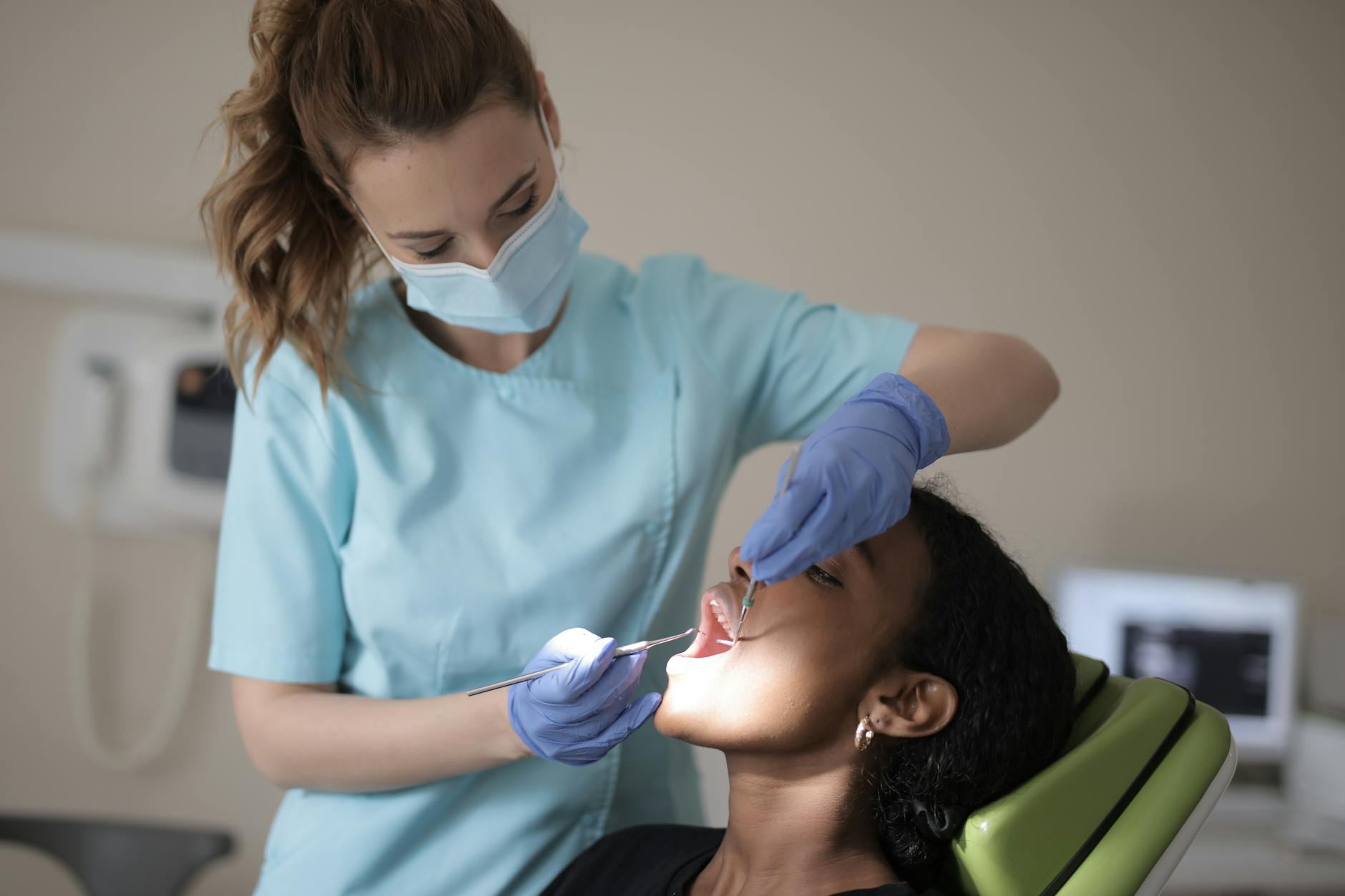
You can smell alveolar osteitis before you see it. The patient walks in hunched over, clutching the side of their face, exhausted from three nights of entirely useless sleep.
1. The diagnostic smell
Most general dentists will prescribe another round of amoxicillin over the phone when you complain of throbbing pain after an extraction. That rarely helps. When patients end up in my surgical chair, I know what is happening the second I open the door. The odor of a degrading blood clot is distinctly foul. It smells like rotting meat. “The pain medicine isn’t even touching it.” That is usually the first thing they say, verbatim. They look gray. Textbook definitions describe dry socket as a condition where the blood clot dislodges completely, leaving an empty hole. You look in the exam room, and it is rarely empty. The socket is packed with food debris, dying tissue, and a gray pseudomembrane that looks deceptively like a healing clot. But the bone beneath is exposed to the harsh environment of the oral cavity. Air hits the trigeminal nerve.
The bone is simply naked.
We have to clean that debris out manually. A 2018 clinical review by Noroozi demonstrated that basic treatment requires irrigating debris with chlorhexidine followed by packing the defect with a medicated dressing. I use surgical loupes to do this. Leaving even a microscopic fragment of necrotic tissue behind guarantees the pain will continue.
2. Eugenol paste
We rely heavily on a compound derived from clove oil. Eugenol soothes exposed nerve endings instantly. The relief is strictly local. You pack the socket with a resorbable sponge soaked in the paste. Patients often slump back in the chair, the tension leaving their shoulders in seconds. We don’t fully understand why the localized nerve block effect of eugenol is so much faster than systemic opioids.
3. Why we flush the socket
Rinsing at home is a delicate balance. You must remove trapped food without creating enough hydrostatic pressure to dislodge whatever frail clot is attempting to form. Most articles will tell you gentle salt water rinses are the best preventive measure. That framing misses the point. Prevention failed days ago. Now we are managing active inflammation. I tell patients to use a curved plastic syringe to deliver chlorhexidine directly into the defect. A 2012 clinical review by Bowe et al. confirmed that common treatments hinge on this exact combination of chlorhexidine rinsing and non-resorbable obtundant dressings. The liquid needs to flush the walls of the socket. You do this twice a day.
4. The ciprofloxacin protocol
Sometimes the standard packing fails. The throbbing returns. A patient told me last week, “It feels like someone is driving a hot nail into my jaw.” When local measures fail, we have to assume a low-grade bacterial invasion of the marrow itself. We use targeted antibiotics for refractory cases. Ciprofloxacin is aggressive. It penetrates bone tissue exceptionally well. A 2023 trial by the Journal of Oral and Maxillofacial Surgery found that ciprofloxacin treatment relieved symptoms in over seventy percent of stubborn cases within twenty-four hours. You combine the oral pills with the local chlorhexidine irrigation. The infection clears quickly once the bacteria are assaulted from both the bloodstream and the oral cavity.
5. Smoking destroys the scaffold
Nicotine constricts blood vessels. The surgical site relies on robust blood flow to build the fibrin network that becomes the clot. Suction from inhaling a cigarette pulls the fragile matrix apart. The heat bakes the exposed tissue. We warn every single extraction patient about this. They nod. Then they drive home and smoke. The clot dies before it can organize into granular tissue.
6. Low-level laser therapy
The standard of care has involved smelly pastes and iodine strips for decades. Now we use light. Photobiomodulation sounds like science fiction, yet it works beautifully on inflamed mucosal tissue. I use a handheld diode laser set to a precise wavelength, hovering it just millimeters above the exposed alveolar bone for roughly four minutes. The light penetrates the cellular membrane. It stimulates mitochondria to produce ATP faster, forcing the tissue to repair itself. Does it replace the physical cleaning of the socket? No. You still have to wash the debris out meticulously. But the laser accelerates the cellular turnover. A 2015 study by Taberner-Vallverdú in the Journal of Maxillofacial and Oral Surgery demonstrated that low-level laser therapy combined with zinc oxide eugenol produces radically faster mucosa healing than saline irrigation alone. Patients report noticeably less aching the following morning. The surrounding gums stop looking angry. It starts turning that firm, pale pink we expect in a healthy mouth. I do not charge extra for the laser application because the drastic reduction in emergency follow-up visits saves me an immense amount of time in the long run. (The insurance companies strictly refuse to cover this modality anyway, classifying it as experimental despite decades of clinical success.)
7. The timing of the pain
True alveolar osteitis rarely starts on the day of surgery. The local anesthesia wears off, leaving normal surgical soreness. Then day three arrives. The pain suddenly spikes, radiating up to the ear or down into the neck. Many mistake this for an ear infection. They drive to a local urgent care clinic. The physician there looks at their eardrum, sees absolutely nothing wrong, and tells them to take ibuprofen. I see this exact sequence of events constantly. The clot lysis takes roughly seventy-two hours to expose the nerve endings fully. If your pain gets worse instead of better on the third morning, you have a dry socket.
8. The role of oral contraceptives
Women taking estrogen-based birth control experience alveolar osteitis at double the rate of the general population. High estrogen levels complicate blood coagulation in the jaws. The hormone enhances fibrinolytic activity. That means the body breaks down the blood clot prematurely. I always try to schedule elective extractions during the final week of a patient’s menstrual cycle. Estrogen is lowest then. Sometimes an emergency extraction cannot wait. We just have to accept the higher risk and pack the defect with a collagen plug immediately after pulling the tooth. It provides an artificial scaffold.
9. Avoid aggressive brushing
Aggressively scrubbing the adjacent teeth with a hard-bristled brush will rip the forming tissue right out of the defect. You want a clean mouth. You do not want a sterile mouth. The gums are swollen and fragile. I tell people to ignore the surgical site completely with their toothbrush for a full week. Plaque will accumulate. That is perfectly fine. A soft film of plaque is infinitely preferable to restarting the bleeding cascade. Let the chlorhexidine rinse handle the bacterial load. The mechanical friction of nylon bristles is the enemy of a healing wound.
10. Bone necrosis is the real danger
Deep in the cortical bone, the actual pathology hides. We focus entirely too much on the superficial blood clot. Without the protective covering of the clot, the bone loses its blood supply from the periodontal ligament space. The outermost layer of the bone literally dies. It becomes necrotic. The body has to resorb that dead bone before it can lay down new mucosa. That process is violently inflammatory. You are waiting for osteoclasts to eat away the dead layer. Until they finish, the ache persists. We can only mask it with eugenol paste. Nothing speeds up the osteoclasts.
Healing a dry socket is an exercise in managing localized bone inflammation while the body slowly clears away necrotic tissue. Follow your surgeon’s irrigation protocol strictly, because a clean surgical defect is the only environment where new mucosa can form.
Medical Disclaimer: This article is for informational purposes only and does not constitute medical advice. Always consult a qualified healthcare professional before making health decisions.




