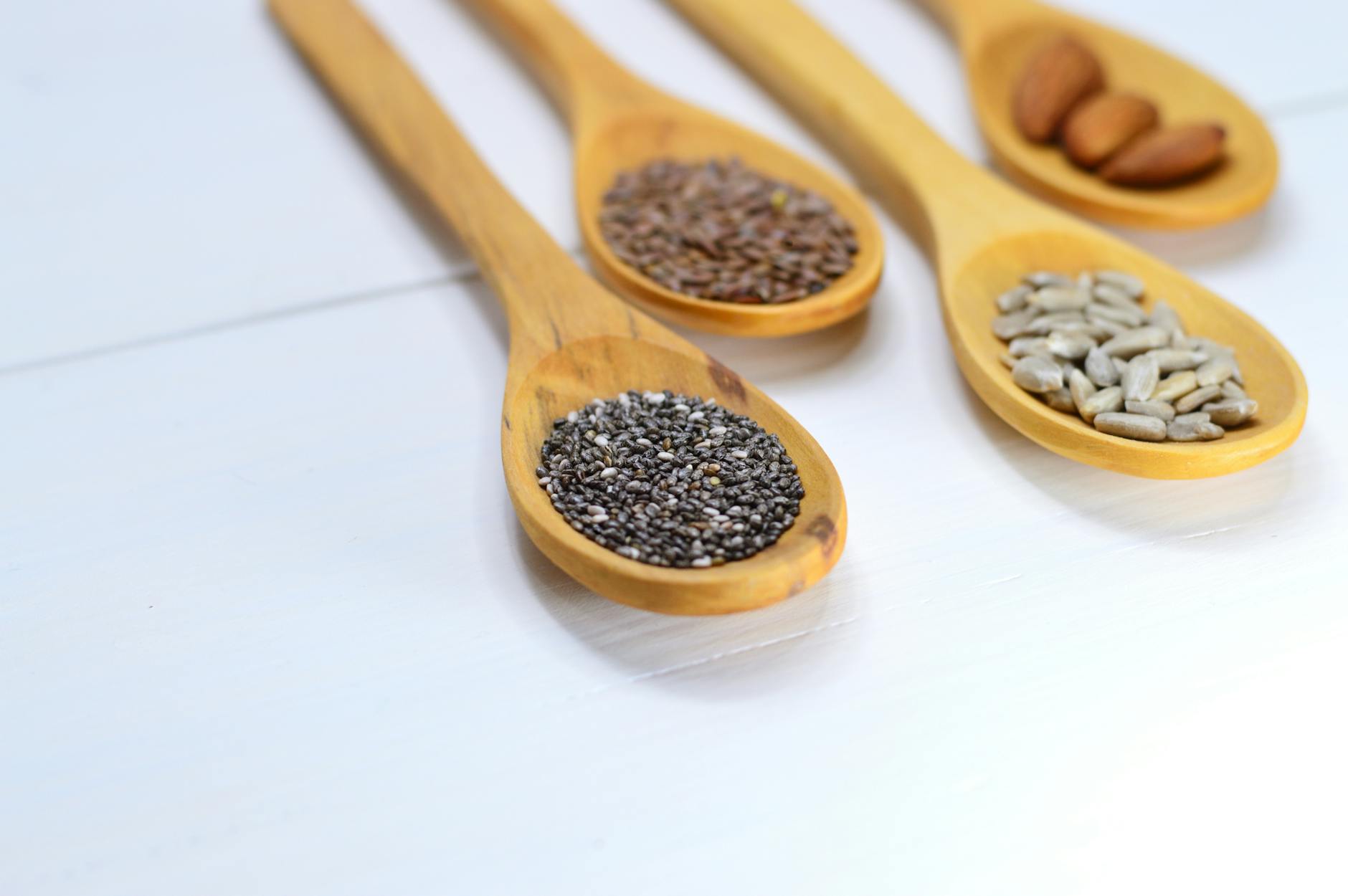
I spend half my week talking to patients in their fifties who are desperate to avoid statins. They usually bring in a notebook full of dietary changes they pulled from a morning show, and somewhere on that list is always flax.
1. The Indestructible Outer Shell
General practitioners usually tell patients with creeping lipids to just add more fiber to their diet. They mean well. But then the patient buys a bag of whole flax seeds, sprinkles them on oatmeal, and comes back three months later furious that their numbers are identical. “I’m eating them by the handful but my cholesterol hasn’t moved,” a man told me last Tuesday. I had to explain that the human digestive tract simply can’t break down the cellulose hull of a whole seed. It passes through you completely untouched. If you want the biochemical benefits, the seed must be milled. Once you grind it, you expose the alpha-linolenic acid and the soluble fiber that bind to bile acids in your gut. That binding process forces your liver to pull cholesterol from your bloodstream to make more bile. It’s a slow, mechanical clearance system.
2. The Alpha-Linolenic Conversion Rate
Plant-based omega-3s aren’t identical to marine sources. Your body has to convert the ALA in flax into EPA and DHA. That conversion pathway is notoriously inefficient. You might get a five percent yield on a good day. Though depending on your baseline delta-6 desaturase enzyme activity, you might get even less. But that doesn’t mean ALA is useless on its own. It acts locally in the vascular endothelium.
3. The Estrogen Mimicry Confusion
Phytoestrogens scare people. Men worry about testosterone drops. Breast cancer survivors panic over receptor activation. Most articles will tell you flax is perfectly safe for everyone. That framing misses the point. The lignans in flax are adaptogenic modulators, not pure agonists. They bind to estrogen receptors very weakly. In a high-estrogen environment, they block stronger endogenous estrogens from docking. In a low-estrogen environment, they step in to provide a quiet baseline hum of activity. That’s why we see a reduction in tumor growth in some oncology populations taking secoisolariciresinol diglucoside from flax. It acts as a buffer.
4. A Distinct Kind of Viscosity
Soluble fiber turns into a thick gel when it hits the water in your stomach. This slows gastric emptying. You end up feeling full for hours. It also flattens the glucose spike from whatever carbohydrates you ate alongside it. The mechanical slowing of digestion alters insulin kinetics entirely.
5. The Blood Pressure Lag
Patients expect food to act like a pharmaceutical. A lisinopril tablet drops your blood pressure in hours. Flax takes about twelve weeks. Why? Because the vascular remodeling required to reduce systemic resistance takes time. The combination of ALA and lignans gradually improves endothelial nitric oxide production. This relaxes the smooth muscle lining your arteries. If you measure too early, you’ll see absolutely nothing. I usually tell patients to wait three months before checking their home cuff. In 2023, Ursoniu and colleagues mapped this precise timeline, showing clear reductions in both systolic pressure and fasting glucose, but only if the ground seed intake was daily and sustained.
6. What We Still Cannot Explain
We know flax alters the gut microbiome. We just don’t entirely understand how it selects for distinct bacterial strains. The lignans require gut bacteria to be converted into enterodiol and enterolactone, the active compounds that actually circulate in your blood. But some people are poor converters. They lack the distinct microbial flora to make the transition happen. We don’t have a reliable way to test for this clinically yet. You might be eating the exact right dose and getting a fraction of the metabolic payoff.
7. Inflammation and the C-Reactive Protein
Does a spoonful of seeds put out a systemic fire? Not exactly. But it does alter the lipid bilayer of your cell membranes. When you incorporate more ALA into those membranes, the cells produce fewer inflammatory prostaglandins. (It is essentially the exact biological reverse of what happens when you consume highly processed industrial frying oils.) This slow cellular turnover eventually registers on lab work. We look for drops in high-sensitivity C-reactive protein. It’s a quiet, gradual cooling of the system rather than an abrupt halt.
8. The Hidden Presentation of Visceral Adiposity
Textbooks describe metabolic syndrome as a tidy cluster of high triglycerides, low HDL, hypertension, and a large waist circumference. In the exam room, it’s rarely that obvious. I can often spot an exact pattern in women navigating menopause before I even order the lipid panel. They look perfectly healthy on the outside. But they complain of creeping fatigue, sudden joint stiffness, and a strange new resistance to weight loss. “My body just feels like it’s vibrating with stress,” one woman explained. That’s systemic low-grade inflammation driven by visceral fat. I told her to start taking thirty grams of milled flax every single day. Four months later, her labs confirmed what I suspected. The Cunnane trials back in 1995 demonstrated this precise mechanism beautifully. Daily consumption actually increases the alpha-linolenate stored directly inside your adipose tissue. It changes the chemical makeup of the fat itself, which then alters how that fat behaves metabolically. It stops acting like an active endocrine tumor and goes back to being dormant energy storage.
9. The Bowel Movement Reality
Let’s talk about motility. The insoluble fiber in the hull adds bulk, while the soluble gel provides lubrication. This combination is highly effective for chronic idiopathic constipation. But you have to match it with water. If you consume forty grams of ground flax and don’t increase your fluid intake, you’ll create a concrete block in your colon. The gel requires hydration to move. Without it, the seeds just sit there, absorbing the residual moisture in your gut and making the initial problem substantially worse.
10. The Oxidation Risk Factor
Buying pre-ground flax feels like a convenient shortcut. But it’s actually a massive gamble. The moment the seed is crushed, the polyunsaturated fats are exposed to oxygen and light.
They degrade fast.
You can taste it when it happens. The powder develops a bitter, almost metallic flavor. That means the fats have oxidized and are now generating free radicals. Eating oxidized lipids directly damages the delicate endothelial lining of your blood vessels. I always tell my patients to just buy whole seeds and a cheap coffee grinder. Grind what you need for the week. Store it in a dark jar in the back of the refrigerator. If it tastes like old paint, throw it out immediately.
True dietary intervention requires mechanical consistency, not just casual addition. Buy the whole seeds, grind them yourself, and commit to a daily dose for at least ninety days before checking your labs.
Medical Disclaimer: This article is for informational purposes only and does not constitute professional medical advice. Always consult a qualified healthcare professional before making changes to your health routine.




