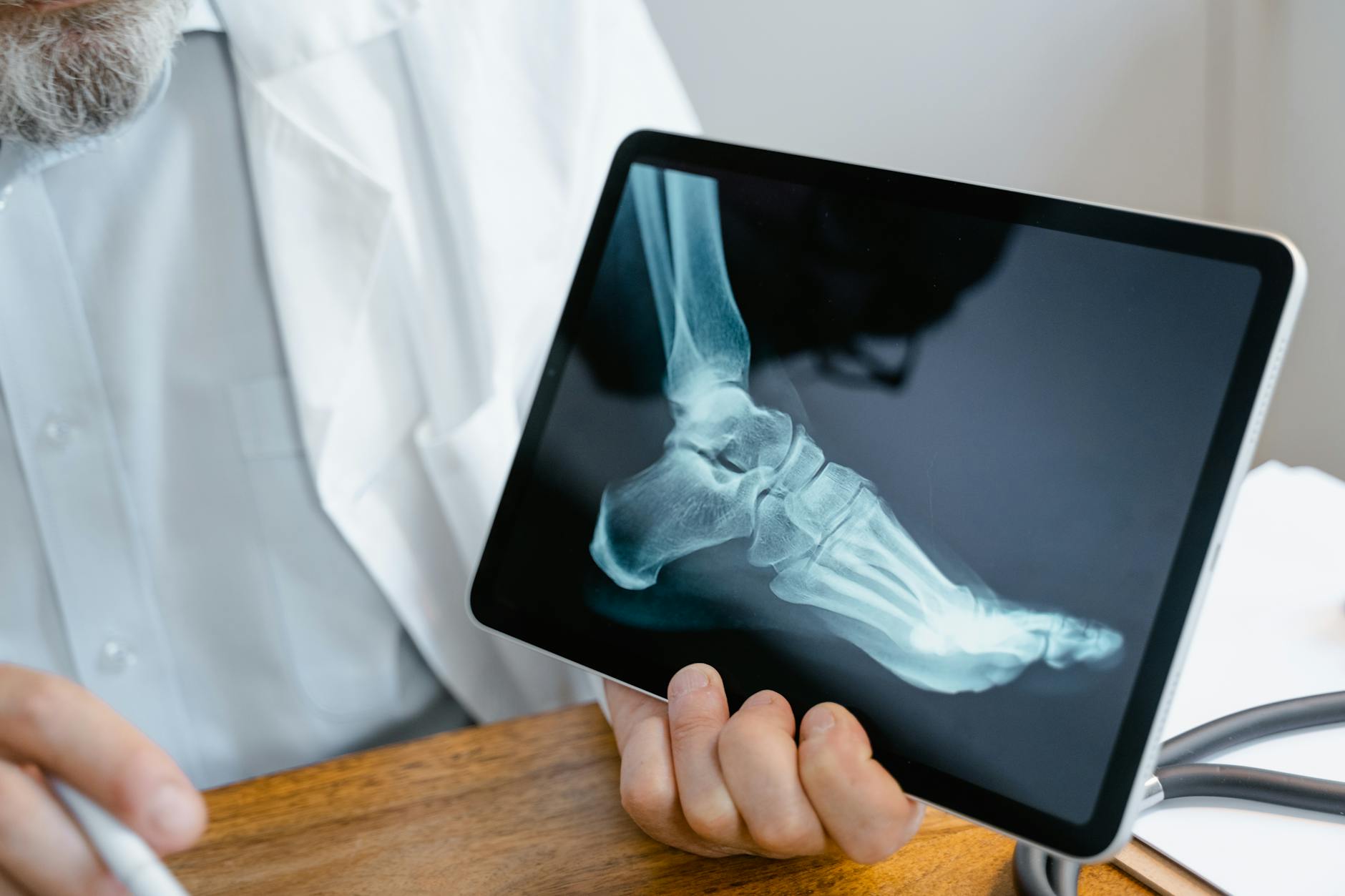
The fibula bone sits quietly on the outer side of your lower leg, overshadowed by its larger neighbor, the tibia. Yet this slender bone plays a critical role in ankle stability, muscle attachment, and even surgical reconstruction. Understanding the fibula can help you protect your legs, recognize injuries early, and appreciate the remarkable engineering of your own skeleton.
1. It Is the Thinner of Two Lower Leg Bones
Your lower leg contains two long bones that work as a team. The tibia, often called the shinbone, handles most of your body weight. The fibula bone runs parallel to the tibia on the outer side of the leg. According to the NIH, the fibula is much smaller and thinner than the tibia, yet it serves as a crucial anchor for muscles and ligaments. Despite its slim profile, the fibula stretches nearly the full length of the lower leg. It connects just below the knee at the top and forms part of the ankle joint at the bottom. Think of it as the quiet partner that keeps everything aligned and stable.
2. It Plays a Key Role in Ankle Stability
Without the fibula, your ankle would be far less secure. The lower end of the fibula forms the lateral malleolus — that bony bump on the outside of your ankle. This structure acts like a wall that prevents your ankle from rolling outward too far. Several important ligaments attach directly to this part of the fibula bone. These ligaments help keep the ankle joint snug during walking, running, and jumping. If you have ever sprained your ankle, the fibula was almost certainly involved. Strengthening the muscles around this area through balance exercises can help protect this joint over time.
3. It Bears Less Weight Than You Might Expect
Many people assume both lower leg bones share the load equally. In reality, the tibia carries roughly 80 to 90 percent of your body weight. The fibula bone handles only a small fraction of that force. However, research published in PubMed confirms that removing the fibula increases stress on the femur, tibia, tendons, and ligaments, highlighting its contribution to torsional stiffness. So while it is not the primary weight-bearer, it still absorbs rotational and lateral forces. This makes it essential for twisting movements and side-to-side stability during everyday activities.
4. Fibula Fractures Are More Common Than People Realize
A broken fibula bone is one of the most frequent lower leg injuries. It often happens during sports, car accidents, or awkward falls. Stress fractures of the fibula can also develop gradually in runners and military recruits who train intensely. Symptoms typically include pain on the outer side of the lower leg, swelling, and difficulty bearing weight. Some fibula fractures occur alongside ankle sprains, making diagnosis tricky without imaging. If you feel persistent pain in the outer part of your leg after an injury, seek medical evaluation promptly rather than assuming it is just a bruise.
5. Surgeons Use It as a Donor Bone for Reconstruction
One of the most fascinating roles of the fibula bone lies outside the leg entirely. Surgeons frequently harvest sections of the fibula to reconstruct other bones, particularly the jawbone after cancer surgery. The NIH describes the fibula as a gold standard graft in mandibular reconstruction because removing it has minimal impact on weight-bearing. The fibula’s long, straight shape and reliable blood supply make it ideal for this purpose. Patients who donate part of their fibula can often walk again with proper rehabilitation. This dual purpose makes the fibula uniquely valuable in modern medicine.
6. Children May Develop Fibula Bone Issues Linked to Certain Conditions
Bone development in children does not always follow a predictable path. Research published in PubMed shows that children with neurofibromatosis type 1 experience slower tibia and fibula bone mass accrual compared to their peers. This gap tends to emerge during mid-childhood and is partly related to growth and weight deficits. Slower bone development can increase the risk of fractures during the growing years. Early screening and nutritional support may help manage these differences. Parents of children with NF1 should discuss bone health monitoring with their pediatrician to stay ahead of potential problems.
7. Advanced Imaging Reveals Surprising Details About Fibula Density
Modern technology is changing how we understand this bone. A recent study using quantitative 7T MRI examined the fibula bone in 107 individuals. Published in PubMed, the research revealed specific patterns of bone thinning and density loss along the fibula. These findings carry significant implications for osteoporosis detection and fracture risk assessment. The study also highlighted how density variations affect the fibula’s suitability as a donor site for reconstructive surgery. As imaging tools improve, doctors can make more precise decisions about treatment and prevention strategies tailored to each patient.
8. The Fibula Serves as an Anchor for Critical Muscles
Several muscles that power your foot and ankle attach directly to the fibula bone. The peroneal muscles, which run along the outer calf, originate on the fibula and help you point your toes and stabilize your foot. Parts of the soleus and certain toe extensor muscles also connect here. Without these attachment points, movements like walking on uneven ground would feel wobbly and unreliable. Weakness in the peroneal muscles is a common contributor to chronic ankle instability. Targeted calf and ankle strengthening exercises can support these muscles and reduce your injury risk over time.
9. A Membrane Connects It to the Tibia
The fibula bone does not work in isolation. A tough sheet of connective tissue called the interosseous membrane stretches between the fibula and the tibia along most of their length. This membrane transfers forces between the two bones and helps distribute impact during activities like running. It also provides attachment points for deep leg muscles. Injuries to the interosseous membrane, sometimes called syndesmotic injuries or high ankle sprains, can be particularly slow to heal. These injuries often require longer recovery times than standard ankle sprains, so accurate diagnosis matters greatly for proper treatment.
10. You Can Protect Your Fibula With Simple Lifestyle Habits
Keeping your fibula bone healthy does not require complicated routines. Weight-bearing exercises like walking, hiking, and light jogging stimulate bone density throughout the lower leg. Getting adequate calcium and vitamin D supports bone strength at every age. Wearing supportive footwear during physical activity reduces the risk of awkward landings and stress fractures. Balance training is especially valuable because it strengthens the small stabilizing muscles around the ankle. If you play high-impact sports, consider ankle braces or taping for added protection. These small habits compound over time and help keep your fibula — and the rest of your skeleton — strong and resilient.
The fibula bone may be small, but its contributions to stability, movement, and even surgical innovation are anything but minor. By staying active, nourishing your bones, and paying attention to pain signals in your lower leg, you can protect this vital structure for years to come. Talk with your doctor if you experience persistent leg or ankle discomfort to rule out any fibula-related issues early.
Medical Disclaimer: This article is for informational purposes only and does not constitute medical advice. Always consult a qualified healthcare professional before making health decisions.




