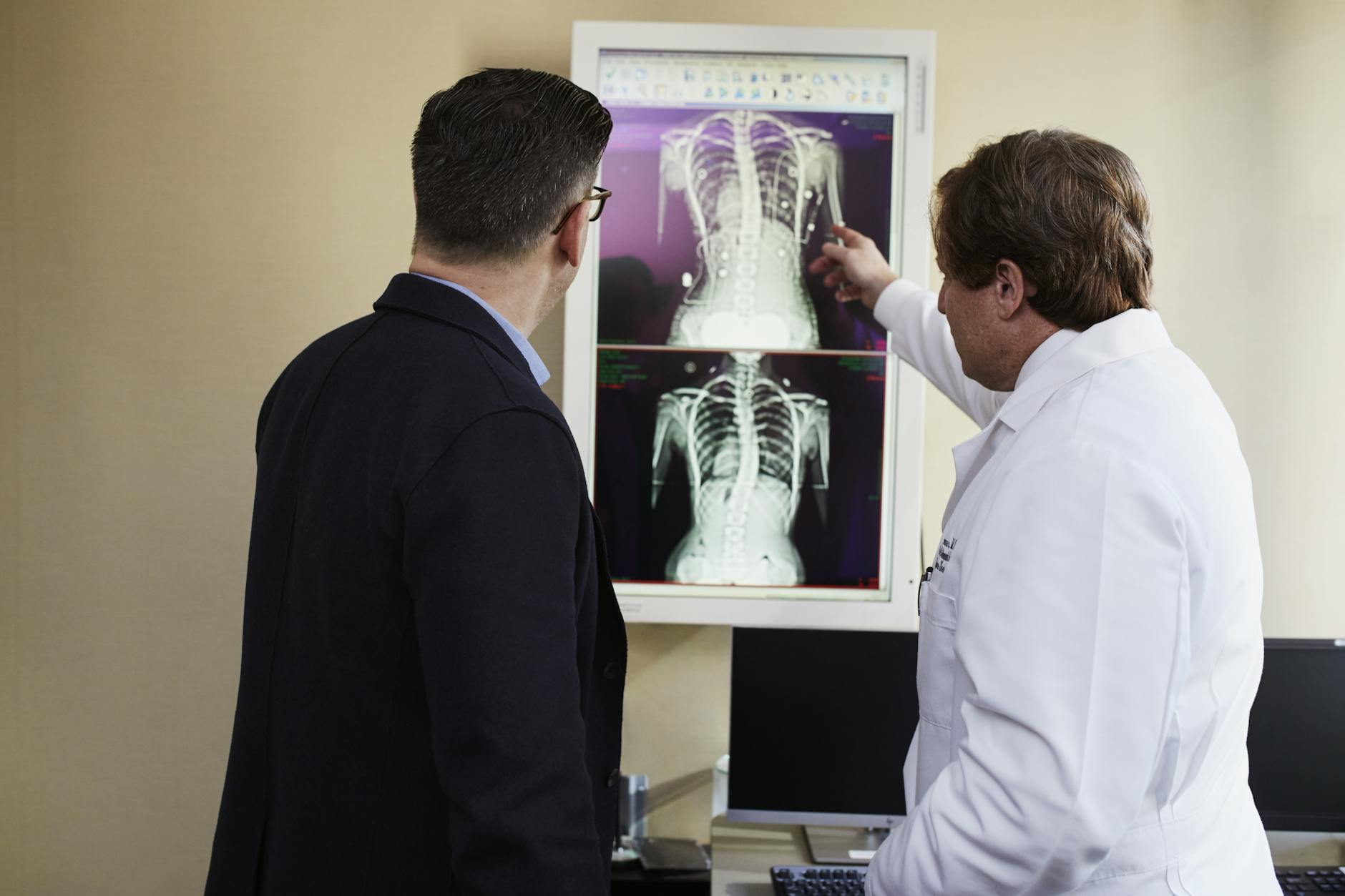
You probably found out you have these little pockets in your colon by accident during a routine screening. Gastroenterologists see this anatomical quirk all day long. But the gap between what you read online and what actually happens in the gut is massive.
1. Your fear of strawberries is misplaced
Most articles will tell you to avoid anything with small seeds. That framing misses the point. Twenty years ago we told everyone with colon pouches to stop eating popcorn because we assumed those fragments would get physically stuck. They do not. A massive 2008 prospective study by Strate et al. in JAMA proved nut consumption actually lowered complication risks. I still hear general practitioners advising strict dietary avoidance. It drives me crazy. “I haven’t had a raspberry since 2014,” a patient told me last Tuesday. Eat the berries. The real enemy is a diet devoid of roughage that turns your stool into concrete. When you strip the seeds and skins away from your food, you eliminate the very fiber your digestive tract needs to maintain normal pressure.
2. Physics dictates the damage
Basically, the colon is a muscular tube. When you don’t eat enough fiber, that tube has to squeeze much harder to move small, hard stool forward. This creates localized high-pressure zones. A 2022 clinical review by Tinsley points out that intraluminal pressure forces the inner lining to push out through weak spots in the muscle wall.
It is pure hydraulics.
3. The toilet bowl turns bright red
Medical textbooks describe this condition as completely silent until an infection brews. The exam room tells a different story entirely. Sometimes the first sign isn’t pain at all. It is a terrifying amount of blood in the toilet. I can usually spot this before the colonoscopy confirms it. An older patient walks in looking pale, anxious, and perfectly comfortable otherwise. They have no fever. Their abdomen isn’t tender when I press on it. But they are bleeding briskly. The blood vessels draped over these colon pouches get stretched impossibly thin over time. Eventually, one of those tiny vasa recta snaps. We still do not fully understand why some bleed and others sit quietly for decades. (We suspect localized trauma from hardened stool plays a role). You end up in the ER thinking you have colon cancer. I go in with a scope, find the single bleeding pocket among dozens of empty ones, and clip it closed. The bleeding stops instantly. It is dramatic and frightening, but perfectly mechanical. You will likely spend two days in the hospital for observation. We watch your hemoglobin levels closely to ensure the clip holds. Most of the time, that single intervention cures the bleeding permanently.
4. Bacteria are mostly innocent bystanders
Blaming your gut flora is the natural reaction. People buy expensive probiotics hoping to heal the structural damage in their colon. A 2023 analysis by Lin et al. in the Journal of Gastroenterology found that having these pockets is not actually associated with an altered microbiome. The bugs in your gut are roughly the same as someone with a perfectly smooth colon. They only found a slight uptick in the genus Comamonas in people who later developed active infections. Stop wasting your money on unregulated supplements. You cannot bacterial-balance your way out of an anatomical hernia. The environment inside the pouch is identical to the rest of the intestine until an obstruction occurs. Focus on moving the stool out, not changing the bacteria within.
5. Vague left-sided aches
“It just feels like a heavy water balloon sitting right here,” a patient said yesterday, pointing to his lower left abdomen. At the primary care clinic, he was handed a pamphlet on irritable bowel syndrome. General practitioners often miss the subtle, smoldering discomfort of Symptomatic Uncomplicated Diverticular Disease. They look for the classic fever and screaming pain of a full-blown rupture. But many patients live in this gray zone. The colon wall is thickened. The muscles are spasming constantly. There is no acute infection to treat with antibiotics, so you get dismissed. We treat the spasm, not the nonexistent bacteria. Prescribing an antispasmodic medication often provides immediate relief for that heavy, dragging sensation. You do not have to live with a constant ache just because your labs look normal.
6. Geography matters
Geographically, Western populations develop these pouches almost exclusively on the left side of the colon. Asian populations develop them on the right. Why? We really do not know. Genetics clearly load the gun while diet pulls the trigger. The pressure dynamics are completely different over there.
7. The connective tissue angle
You are probably wondering if getting older guarantees you will get this. Yes and no. Age degrades collagen. The structural integrity of your gut wall relies heavily on connective tissue. As we age, that tissue loses its tensile strength. A 2020 review by Peery in Clinical Gastroenterology details how the mucosa literally herniates through the muscularis. It is exactly like a weak spot on a bicycle tire bulging outward. You cannot reverse this aging process. You can only manage the tire pressure. We see this tissue degradation accelerate rapidly after age sixty. That is why routine colonoscopies reveal these pockets in over half the senior population. Accept the structural change, and adapt your habits to accommodate it.
8. Visceral fat changes the rules
Let me be blunt about weight. Subcutaneous fat sits passively under your skin. Visceral fat packs itself aggressively around your internal organs. That deep belly fat is biologically active tissue that constantly pumps out inflammatory cytokines. When you have pouches in a colon bathed in an inflammatory soup, your risk of complications skyrockets. The tissue is already angry. It takes very little to push it over the edge into a micro-perforation. Losing ten pounds of visceral fat does more to protect your colon than any fiber supplement on the market. We see this shift clearly on CT scans. Patients who reduce their waistline dramatically reduce the fatty stranding around their lower intestine. You are removing the fuel from a potential fire before a spark ever lands.
9. Jogging shakes the pipes
Nobody talks about gravity and motion. We fixate entirely on what goes into the mouth. But the human digestive tract evolved in a body that ran, squatted, and walked miles every single day. Look at the patients who end up hospitalized with severe complications. They are almost universally sedentary. When you sit at a desk for nine hours, your colon goes to sleep. Transit time slows to a crawl. Water gets sucked out of the stool until it turns into jagged little rocks. Then you strain. The pressure spikes wildly. The pouches expand. Vigorous physical activity physically jostles the colon. It stimulates the smooth muscle to contract rhythmically rather than spastically. I have watched patients completely halt the progression of their disease simply by taking up daily brisk walking. They did not change their diet at all. They just stopped sitting. The mechanical stimulation of your foot hitting the pavement translates directly to motility in the pelvis. Move your body, and your bowels will follow. I tell my patients to buy a treadmill instead of a juicer. The results are undeniable when you look at the imaging year after year. Those who stay active keep their colons remarkably compliant and flexible.
10. The knife is a last resort
Years ago, surgeons used to cut out sections of the colon after two or three mild infections. We thought we were preventing a catastrophic rupture. We were wrong. We eventually learned that the first attack is usually the worst. Subsequent flare-ups tend to be milder. Taking out a foot of your large intestine is a brutal, life-altering intervention. You wake up with a totally different digestive system. We reserve resection for strictures, fistulas, or massive perforations. If someone offers you a scalpel for mild, uncomplicated pouches, get a second opinion immediately. The surgical guidelines shifted massively over the last decade. Elective removal is practically unheard of now in modern gastrointestinal practices. Your anatomy might be flawed, but leaving it intact is almost always safer than cutting it out.
Your colon is an active, aging muscle that requires physical bulk to function properly. Stop overthinking the minor dietary details and start walking every day.
Medical Disclaimer: This article is for informational purposes only and does not constitute professional medical advice. Always consult a qualified healthcare professional before making changes to your health routine.




